
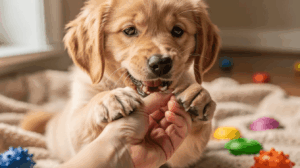
Puppy biting is one of the most natural behaviors in canine development and does not automatically mean something is wrong with your dog. Many puppy owners experience nipping, mouthing, and sometimes surprisingly sharp bites during the first several months. Understanding why puppies bite is the first step toward managing it effectively.
This article covers the biological and behavioral reasons behind puppy biting, what is normal versus concerning at each age, practical techniques for reducing puppy biting, and clear guidance on when professional support may be needed. Whether you are a first-time puppy owner, a family with young children navigating mouthy behavior, or someone feeling frustrated by persistent nipping, this guide provides practical answers grounded in veterinary science and professional training experience.
The short answer: Puppies bite primarily for exploration, teething relief, play, and learning bite inhibition. In most cases, it is a normal part of their development rather than a sign of aggression.
Here is what you will take away from this article:
- The biological reasons puppies use their mouths to interact with the world
- Age-specific biting patterns and what to realistically expect at each stage
- Step-by-step management strategies, including redirection, bite-inhibition training, and structured routines
- How to distinguish normal play biting from potentially concerning behavior
- When to seek help from a veterinarian or qualified behavior professional

Understanding Normal Puppy Biting Behavior
Normal puppy biting is a communication and learning tool, not automatically misbehavior. Puppies explore their world using their mouths, gather information about textures and social boundaries, and practice important social skills through mouthing and nipping. This behavior still needs guidance so the puppy learns that toys are appropriate for chewing and that human skin and clothing are not.
Developmental Biting and Exploration
Young puppies interact with their environment in much the same way human babies use their hands: by putting things in their mouths. Mouthing begins before most puppies leave their litter and often becomes especially noticeable after they enter a new home. When a puppy grabs your fingers, shoes, or clothing, it may be exploring texture, initiating play, seeking attention, or responding to excitement or teething discomfort.
This is why puppy mouthing should be managed rather than simply punished. The behavior serves a developmental purpose. Your goal is not to eliminate all mouth contact immediately but to shape the puppy’s behavior toward acceptable boundaries over time.
Play Biting and Social Learning
Play biting is one way puppies learn an important social skill called bite inhibition. When puppies play with their littermates, they receive immediate feedback. A littermate that is bitten too hard may yelp and stop playing. The mother may walk away or interrupt the interaction. Through this process, puppies begin learning to control their bite force because biting too hard can end the fun.
Puppies learn bite inhibition partly through play with their littermates, which is one reason puppies generally should remain with their mother and litter until at least eight weeks unless health or welfare circumstances require a different arrangement. Puppies separated unusually early may have fewer opportunities to receive this social feedback, although genetics, health, later socialization, and individual experience also influence mouthy behavior. Your puppy is not being “bad.” It is practicing a skill that it needs your help to refine.
Common Reasons Puppies Bite at Different Ages
Knowing what drives biting behavior at each developmental stage lets you respond appropriately rather than reactively. Mouthing is often especially noticeable during early puppyhood, and teething may increase chewing after permanent teeth begin emerging at around 12 weeks. However, the intensity and timing of puppy biting vary considerably between individual dogs.
8–12 Weeks: Early Exploration and Adjustment Phase
During this stage, younger pups are adjusting to life away from their littermates and in a new human family. Mouthing may involve exploration, play invitations, attention seeking, excitement, or stress as the puppy navigates unfamiliar surroundings. All 28 baby teeth have typically erupted by approximately six weeks, while permanent teeth generally begin emerging at around 12 weeks.
Expect nipping at fingers and feet, mouthing of clothing, and attempts to initiate play through biting. Although these behaviors are common, a young puppy’s needle-sharp teeth can still cause painful scratches or broken skin. Calm redirection and consistent management can help, but improvement is usually gradual rather than immediate.
12–20 Weeks: Active Teething Period
This can be a challenging period for puppy biting and chewing. Permanent teeth begin replacing baby teeth at around 12 weeks, and the resulting gum discomfort may increase a puppy’s desire to chew. A dentition study of 440 puppies across 82 breeds found that permanent-tooth emergence occurred later in small or toy breeds and brachycephalic breeds, although the study did not measure teething discomfort or biting behavior.
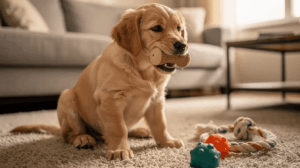
During this period, you may notice more persistent chewing, harder play biting, or increased interest in furniture and shoes. Consistent redirection is important. Provide appropriately sized, puppy-safe chew toys and chilled teething toys, supervise their use, and replace anything that becomes damaged or small enough to swallow.
4–6 Months: Continuing Bite-Inhibition Training
By approximately six months, most puppies have lost their baby teeth and their permanent teeth have erupted, although timing can vary by breed and individual. Teething-related chewing may begin to decrease, but learned mouthing, excitement, frustration, and rough play can continue after teething ends.
Bite-inhibition training should begin well before this stage and remain consistent as the puppy grows and develops greater jaw strength. A 2021 study on canine mouthing behavior found that mouthing occurred at higher rates in dogs under one year old, but it did not establish that inadequate training or insufficient stimulation directly caused mouthing in adult dogs. Continued redirection, reinforcement, rest, and age-appropriate activity can help shape safer behavior.
Effective Management Strategies and Training Techniques
An effective approach to puppy biting combines redirection, consistent feedback, appropriate management, and structured daily routines. No single technique works for every puppy. Success usually comes from combining several strategies with patience.
Redirection Methods and Appropriate Toys
When a puppy grabs your hand, arm, or clothing, calmly disengage and substitute an appropriate toy. The process is straightforward:
- Stop moving when your puppy mouths human skin or clothing.
- Calmly present an appropriate chew toy or tug toy.
- Praise and encourage the puppy when it takes the toy instead.
- Resume play with the toy so chewing it becomes more rewarding than nipping skin.
- Provide a variety of appropriately sized toys, such as durable rubber toys, supervised tug toys, and chilled puppy-safe teething toys.
Redirect biting to an appropriate toy consistently. Timing matters because a prompt substitution makes the lesson clearer. Keep toys accessible in the rooms where your puppy spends time so you can respond without scrambling to find one.
Teaching Bite Inhibition Through Consistent Responses
You can teach bite inhibition by showing your puppy that painful biting ends social interaction:
- When your puppy delivers a hard bite, calmly stop moving and end the interaction.
- A brief yelp may interrupt some puppies, but skip it if the sound makes your puppy more excited or causes harder biting.
- Withdraw attention for 10–20 seconds by standing up, turning away, or briefly stepping behind a gate.
- If the puppy calms down, resume play with an appropriate toy at a lower energy level.
- If biting returns immediately, end the interaction again and give the puppy another opportunity to settle.
The goal is to show the puppy that gentle interaction continues while painful biting ends play. Avoid using the crate as punishment because the crate should remain a safe, positive place for rest and management.
Over time, you can gradually expect gentler behavior. Begin by ending play after the hardest bites. As those decrease, respond consistently to moderate pressure and eventually to any unwanted teeth-on-skin contact.
Consistent responses from all household members are important. If one person encourages rough play while another ends play after biting, the puppy receives mixed signals and learning may take longer.
Creating Structure and Routine
Puppies may bite more when overtired or overstimulated, and this is one of the most overlooked contributors to excessive nipping. Young puppies sleep for much of the day, although their exact needs vary with age, health, breed, and activity.
If biting increases after prolonged activity, calm downtime or a nap may help the puppy settle. Sudden or unusual irritability should not automatically be attributed to fatigue because pain, illness, hunger, or the need for a bathroom break may also contribute.
Build a daily schedule that balances:
- Active play and exercise: Use short, supervised, age-appropriate sessions that satisfy play needs without overwhelming the puppy.
- Mental stimulation: Training exercises, puzzle feeders, and simple obedience work can provide productive mental activity.
- Rest and quiet time: Positive crate training or another safe rest area gives the puppy a calm place to decompress.
- Appropriate social interaction: Carefully supervised interaction with compatible puppies and friendly, healthy adult dogs can provide valuable social experience.
| Situation | Effective Response | Counterproductive Response |
| Puppy bites during play | Stop play, calmly disengage, and redirect to a toy | Pulling your hand away quickly, which may encourage chasing |
| Puppy nips for attention | Safely withdraw attention and resume when calm | Scolding or turning the interaction into rough play |
| Puppy chews furniture | Redirect to an appropriately sized chew toy | Using physical punishment or frightening the puppy |
| Puppy mouths during petting | Stop petting, wait for calm, and resume gently | Pushing the puppy away in a way that feels like play |
Avoid physical punishment. Hitting, holding the mouth shut, or yelling can frighten puppies, damage trust, and potentially intensify defensive or overexcited behavior.
Common Challenges and Solutions
Even with consistent training, certain situations require additional attention or a modified approach.
Distinguishing Concerning Behavior From Normal Biting
Normal play biting usually occurs with loose, playful body language, but it is not always soft, and a highly aroused puppy may have difficulty disengaging. Vocalization can also occur during normal play. The full context, body posture, triggers, intensity, and ability to recover are more informative than any single behavior.
More concerning patterns include a stiff or frozen body, repeated hard biting during handling or restraint, lip lifting, deliberate snapping outside play, escalating resource guarding, or biting associated with fear, pain, or attempts to escape. Because sharp puppy teeth can accidentally break skin, an injury alone does not confirm aggression.
If your puppy displays these patterns, avoid confrontation and arrange an assessment. Start with your veterinarian if the behavior appeared suddenly or pain may be involved. For ongoing fear, guarding, or aggressive behavior, consult a board-certified veterinary behaviorist, Certified Applied Animal Behaviorist, or qualified trainer with documented experience handling puppy aggression cases.
Persistent Biting Despite Consistent Training
When a puppy’s mouthy behavior does not improve after several weeks of consistent training, consider these potential contributors:
- Insufficient or inappropriate activity: Puppies need age-appropriate play and mental stimulation. Boredom or frustration may contribute to nipping, but excessive activity can also leave a puppy overstimulated.
- Medical issues: Pain from retained baby teeth, ear infections, injuries, or other sources of discomfort can increase irritability. A veterinary examination is warranted when behavior changes suddenly.
- Attention-seeking reinforcement: Biting can become more persistent if it consistently produces an exciting reaction from people, even when that reaction is negative.
- Inconsistent responses: If different people respond differently, the puppy may have difficulty understanding what behavior is expected.
- Insufficient rest: A puppy that has been active for too long may have more difficulty settling and controlling its behavior.
A 2023 review published in Veterinary Clinics of North America, titled “Early Puppy Behavior: Tools for Later Success,” discusses the roles breeders and veterinarians can play in early behavior support, including appropriate handling, object-exchange exercises, socialization, and bite prevention. These strategies may support healthy development, but they cannot guarantee that a puppy will avoid later behavior problems.
Puppies with limited early socialization may benefit from carefully managed exposure and professional guidance.
Managing Biting Around Children
Children may be frequent targets of puppy nipping because they move quickly, make exciting sounds, and may be close to the puppy’s face. Safety must be the priority:
- Never leave young children and puppies unsupervised together, even with a well-socialized puppy.
- Teach children to stop moving and stand like a “tree” if the puppy begins nipping.
- Show children how to interact safely with the puppy using gentle petting and calm voices.
- Teach children to call an adult instead of trying to discipline or physically restrain the puppy.
- Use gates, pens, or separate areas when active supervision is not possible.
Use brief withdrawal of attention to manage attention-seeking biting, and keep interactions between children and puppies calm and structured. A puppy that feels frightened, cornered, or overwhelmed by a child’s activity may escalate from playful nipping to defensive biting.
Conclusion and Next Steps
Puppy biting is a common and developmentally normal behavior, but that does not mean you have to endure painful nips without a plan. By understanding why puppies bite and responding with consistent, positive techniques, families can gradually reduce painful and inappropriate mouthing.
The rate of improvement varies with the puppy’s age, temperament, health, environment, reinforcement history, and household consistency.
Start with these immediate action steps:
- Keep appropriate chew toys accessible and redirect unwanted mouthing to those toys.
- Establish a household-wide protocol in which everyone calmly ends play after a hard bite. Use a brief yelp only if it helps rather than increasing the puppy’s excitement.
- Build a daily routine that includes age-appropriate exercise, mental stimulation, bathroom breaks, and adequate rest in a positive crate or safe resting area.
- Consider a well-run puppy class that uses appropriate supervision and considers each puppy’s health, vaccination status, and comfort level.
- Expect gradual progress: Teething usually continues until approximately six months, and learned mouthing may persist after the adult teeth have emerged. Track whether bites are becoming less frequent, less intense, and easier to interrupt rather than expecting the behavior to disappear by a fixed age.
If you are not seeing improvement or your puppy’s biting feels concerning, seek professional support. Owners who want structured guidance can learn more about our reward-based Pawsitive Puppy Lesson Program and request a free consultation to discuss the appropriate next step.
Frequently Asked Questions
How can I stop my puppy from biting my hands and feet?
Consistently redirect your puppy’s biting to appropriate chew toys. Avoid using your hands or feet as play objects. When the puppy bites, stop moving, calmly disengage, and offer a toy instead. Praise the puppy when it chooses the toy. All family members should follow the same approach.
When do puppies stop biting?
Mouthing often decreases as puppies mature. Teething is usually complete around six months, but there is no universal age when all puppies stop biting. Play biting and learned mouthing may continue after teething, especially during excitement. Consistent redirection, reinforcement, rest, and appropriate play can help the behavior improve gradually.
How do I teach my puppy to mouth gently?
When your puppy bites too hard, calmly stop play and withdraw attention briefly. A short yelp may interrupt some puppies, but stop using it if it increases excitement or harder biting. Resume calm interaction when the puppy settles and redirect it to an appropriate toy.
What should I do if my puppy bites persistently despite training?
If persistent biting does not improve with consistent redirection and brief withdrawal of attention, consider the puppy’s sleep, activity level, environment, health, and reinforcement history. Consult a veterinarian if the behavior changed suddenly or discomfort may be involved. A qualified behavior professional can help with ongoing problems.
Is puppy biting a sign of aggression?
Most puppy biting is related to play, exploration, excitement, or teething rather than aggression. More concerning patterns may include stiff or frozen posture, lip lifting, repeated hard biting during handling, snapping outside play, escalating guarding, or biting associated with fear or attempts to escape. Evaluate the full context rather than relying on growling or broken skin alone.
Why do puppies bite when they are overtired?
Some puppies become more irritable, excitable, or mouthy when they have been awake or active for too long. Calm downtime and adequate rest may help. However, sudden or unusual irritability can also result from pain, illness, hunger, or another unmet need.
Can teething cause a puppy to bite more aggressively?
Teething discomfort can increase the frequency or intensity of chewing and mouthing, but that does not necessarily mean the puppy is behaving aggressively. Provide appropriately sized puppy-safe chew toys or chilled teething toys under supervision. Contact a veterinarian if the puppy shows severe pain, difficulty eating, facial swelling, unusual bleeding, or a sudden behavior change.
How important is consistency among family members in managing puppy biting?
Consistency is important. If some family members end play after biting while others encourage rough interaction, the puppy receives mixed signals. Everyone in the household should follow the same calm response and reward appropriate toy play.
What types of toys are best for redirecting puppy biting?
Appropriately sized rubber chew toys, supervised tug toys, puppy-safe teething toys, and durable stuffed toys can be useful. Choose toys that match the puppy’s size and chewing style, supervise their use, and remove anything that becomes damaged or small enough to swallow.
How can I prevent my puppy from biting my clothes or shoes?
Keep tempting items such as slippers, loose clothing, and shoelaces out of the puppy’s reach when possible. Stop moving if the puppy grabs clothing, calmly redirect it to a toy, and avoid turning the interaction into a chase or tugging game. Appropriate activity, rest, and access to safe chew toys can also help.
When should I seek professional help for my puppy’s biting?
Seek help if biting persists despite consistent management, suddenly becomes more intense, is associated with fear or guarding, or repeatedly causes injuries. Begin with a veterinarian if pain or illness may be involved. For behavioral concerns, consult a board-certified veterinary behaviorist, Certified Applied Animal Behaviorist, or qualified trainer with relevant experience.
Is it normal for puppies to bite more during play?
Yes. Puppies often use their mouths to initiate and participate in play. Play biting helps them practice social communication and bite inhibition. Calm redirection and consistent limits help teach a puppy how to play safely with people.