
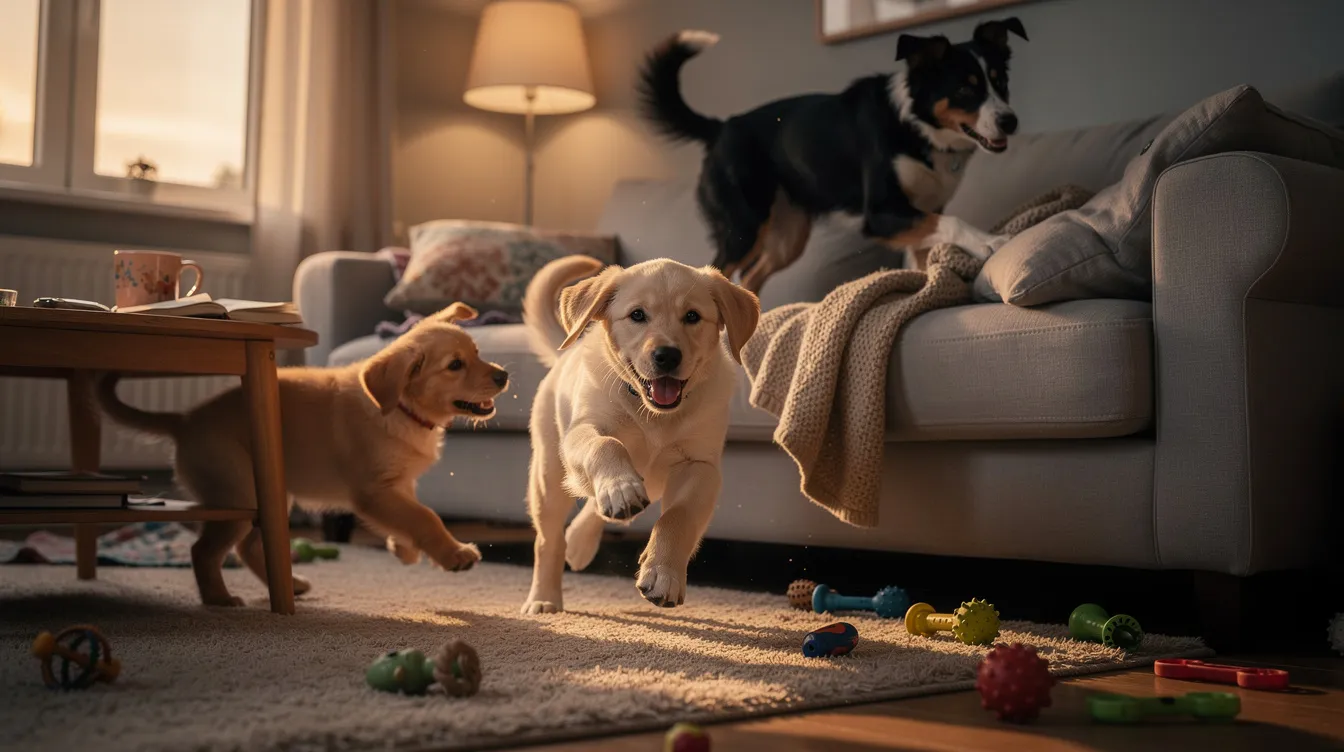
Every evening around 5–8 PM, your sweet puppy transforms into a tiny tornado of zoomies, biting, and barking – and nothing you do seems to help. This is the puppy witching hour, a recurring window of intense, seemingly uncontrollable hyperactivity that catches most people off guard. It is completely normal puppy behavior, not a sign of bad behavior or a training failure.
This guide covers everything you need to know about the puppy witching hour: what it looks like, why it happens, proven strategies to manage it, and a realistic timeline for when it fades. Whether you’re a new puppy owner in San Antonio or anywhere else, the goal is the same – calmer evenings, a healthier pup, and a household that doesn’t dread dinner time.
Early answer: Puppy witching hour is a natural developmental phase where puppies become hyper due to overtiredness and overstimulation. Witching hour typically occurs between 5 PM and 9 PM and usually lasts about an hour, though episodes can range from 30 to 90 minutes. Most puppies grow out of it by 5–6 months of age.
By the end of this post, you will:
- Understand why your puppy goes crazy at a certain time each evening
- Identify the specific triggers behind witching hour episodes
- Implement practical tips and management strategies that actually work
- Build a consistent evening routine that encourages calm behavior
- Know when it’s time to seek professional puppy training support
Understanding Puppy Witching Hour
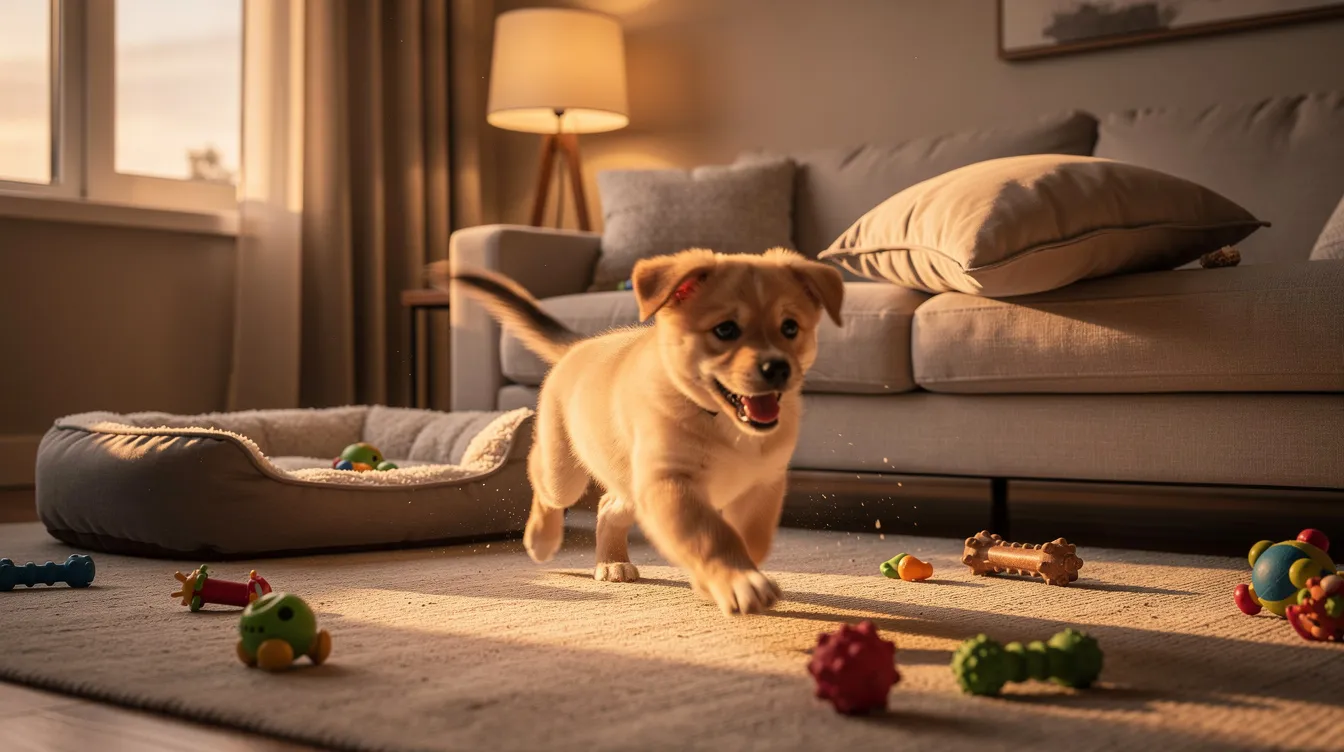
The puppy witching hour – sometimes called evening zoomies or FRAPs (Frenetic Random Activity Periods) – describes a predictable window, typically in the early evening, when puppies experience a dramatic spike in energy and arousal. The behavior usually emerges between 5 PM and 9 PM and can last anywhere from 30 to 90 minutes depending on the puppy’s age, breed, and how the day unfolded.
This isn’t random chaos. It’s a developmental phenomenon tied directly to your puppy’s immature nervous system and still-developing brain. Young dogs simply lack the neural circuitry – particularly in the prefrontal cortex responsible for impulse control – to regulate their energy and emotions the way adult dogs can. Understanding this is the first step toward managing it effectively and preserving household harmony.
Common Behaviors During Witching Hour
During witching hour, you’ll typically see a cluster of these behaviors appear all at once:
- Zoomies – sudden bursts of frantic running, often in circles or figure-eights
- Excessive biting and mouthing – nipping at hands, feet, and clothes with increased intensity
- Jumping on people, furniture, or counters
- Barking and other vocalizations that seem directed at nothing
- Inability to settle – your pup ignores cues that worked perfectly earlier in the day
- Stealing objects and engaging in keep-away games
- General excitement that feels impossible to redirect
Witching hour behaviors include zoomies and excessive vocalization, but the key distinction is between normal developmental hyperactivity and genuine aggression. Normal witching hour behavior is energetic but playful – mouthing is exploratory, not intended to cause harm. If your puppy shows persistent aggressive biting that causes wounds, fear-based reactions, or escalating intensity despite consistent management, that warrants professional evaluation.
Age Range and Development Stage
Most puppies begin displaying witching hour behavior around 8–12 weeks, often right after arriving in their new home. Peak intensity typically hits between 10–16 weeks, when impulse control is at its lowest and energy regulation abilities are most limited.
The good news: the behavior naturally declines around 5–6 months as the brain matures and puppies gain better self-regulation. High-energy breeds – think working dogs, herding breeds, and sporting lines – may continue showing milder evening hyperactivity until 8–9 months. Some breeds don’t fully reach social maturity until 12–18 months, though the intense witching hour episodes typically resolve well before that.
Research confirms that puppies under 12 months show measurable differences in executive function tied to excitability and attentional control. Puppies with higher excitability scores perform worse on impulse-control tasks, which helps explain why some pups have more intense witching hours than others.
This developmental basis is exactly why the witching hour happens – so let’s look at the specific triggers.
Why Puppy Witching Hour Happens
The witching hour isn’t caused by one single factor. It’s a convergence of developmental biology, accumulated daily stress, and natural rhythms that collide during the evening transition period. Understanding each trigger helps you address the root causes rather than just reacting to the symptoms.
Overtiredness and Energy Regulation
This is the most counterintuitive cause: overtired puppies often go into energy overdrive instead of resting. Just like overtired toddlers, a pup who has been awake too long without adequate naps doesn’t quietly fall asleep – they melt down.
Puppies need around 18–20 hours of sleep daily. When those naps are skipped or cut short, the puppy’s immature stress-response system crashes, producing bursts of uncontrolled arousal. Overtiredness can lead to hyperactivity in puppies that looks like excess energy when it’s actually exhaustion manifesting as frantic behavior. Research on canine sleep shows that sleep deprivation – even partial – measurably increases irritability, impulsiveness, and emotional reactivity in young dogs.
Natural Circadian Rhythms
Canines are naturally most active during twilight hours, a behavior known as crepuscular habits. Puppies are naturally more active at dawn and dusk, inheriting this pattern from their wild canid ancestors. The evening transition period can increase a puppy’s energy level simply because biology says it’s time to be active.
Modern domestic life creates a mismatch: artificial lighting, evening household activity, and feeding schedules can delay the natural wind-down process. Your pup’s internal clock says “go,” while you’re hoping for calm. Recognizing this ancestral pattern helps you work with your puppy’s rhythms rather than against them.
Overstimulation Factors
Throughout the day, your puppy accumulates arousal from novel sights, sounds, social interactions, and household activity. Puppies may be overstimulated from a busy day with new sights and sounds, and by late afternoon, their threshold for excitability has dropped significantly.
The lack of adequate rest periods during the day compounds this. Without sufficient naps to process and recover, all that stimulation builds until the puppy’s system releases it as pent-up energy – and the witching hour begins. Puppies have pent-up energy that needs an outlet, often resulting in hyperactive behavior that hits hardest when the household is transitioning through dinner, kids’ homework, and evening routines.
With the causes clear, let’s move into what actually works.
Proven Management Strategies
The most effective approach to the witching hour combines proactive prevention with smart in-the-moment redirection. Professional trainers increasingly emphasize that the fix is usually not more intense physical exercise but rather more rest, structured calm enrichment, and a predictable schedule. Pent-up energy can cause puppies to release energy all at once, so the goal is preventing that buildup in the first place.
Pre-Emptive Preparation
The best time to manage the witching hour is before it starts. If your puppy’s hyper window typically hits around 6 PM, begin preparations by 4:30–5:00 PM:
- Remove tempting items and hazards – Pick up shoes, clothes, children’s toys, and anything your pup tends to steal or destroy during episodes
- Ensure a recent potty break – Physical discomfort from needing to go amplifies stress and agitation
- Prepare calming enrichment activities – Set up snuffle mats, food puzzles, or lick mats ready to deploy; sniffing activities can help lower a puppy’s arousal levels more effectively than many other interventions
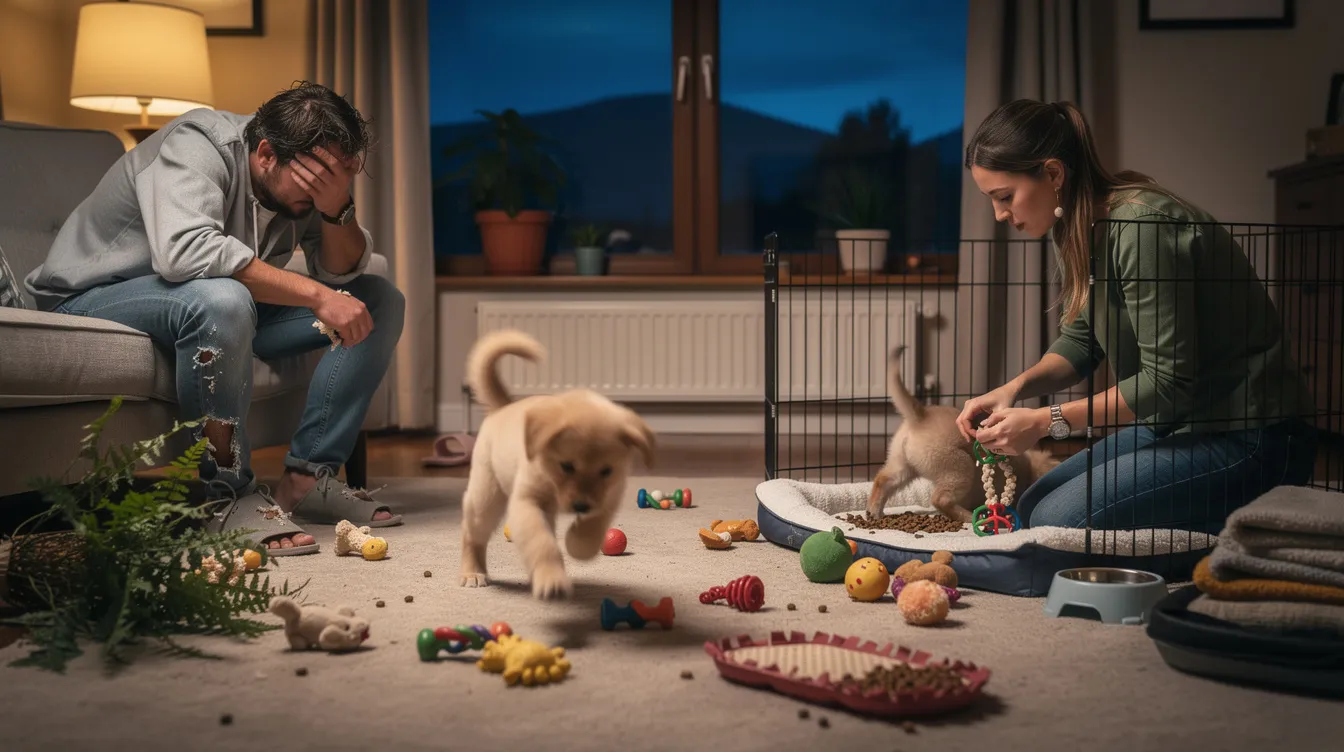
- Set up a safe containment area – A properly introduced crate or pen with comfortable bedding and familiar scents serves as a cool-down space, not a punishment zone
Encouraging a nap 1–2 hours before the expected witching hour can dramatically reduce evening intensity. Enforced rest is one of the most powerful preventive tools available.
Energy Redirection Techniques
Not all activities are equally effective, and timing matters enormously. Here’s how different approaches compare:
| Activity Type | Examples | Best Timing | Effectiveness |
|---|---|---|---|
| Physical outlets | Short walk, play tug, fetch | Late afternoon, before witching hour begins | Burns energy effectively but can backfire if done too close to bedtime – may heighten arousal instead of reducing it |
| Mental stimulation | Puzzle feeders, training games, hide treats around the house | Before or during early witching hour | Mental stimulation can calm puppies faster than physical exercise; often more tiring than a walk |
| Calming activities | Long-lasting chew, snuffle mats, gentle massage, calming music | During witching hour and leading into bedtime | Naturally calming; supports wind-down and sleep readiness. Sniffing activities can calm dogs faster than walks |
The sweet spot is combining moderate physical exercise earlier in the afternoon with mental stimulation and calming activities closer to the witching hour window. Mental stimulation often tires puppies out faster than physical exercise alone. Short training sessions – even five minutes of sit, down, and impulse control work – can help channel excess energy while building valuable obedience skills.
Finding the right balance between exercise types is essential. Physical exercise and mental enrichment are both important for puppies to prevent frenetic behavior, but loading up on vigorous play right before the evening window often makes things worse. A trainer guide from 2026 reports that implementing a three-step protocol – enforced late afternoon nap, low-arousal enrichment leading into evening, and a structured calm-down routine – reduced intense witching hour episodes from 60–90 minutes down to roughly 15 minutes in many cases.
Common Challenges and Solutions
Even with solid preparation, specific situations can complicate witching hour management. Here are the most frequent struggles owners face and how to address them.
Puppy Won’t Settle Despite Efforts
When your pup won’t relax no matter what you try, the issue is almost always insufficient daytime rest or inconsistent routines. Puppies need 18–20 hours of sleep daily – if your puppy isn’t getting close to that, evening meltdowns are predictable.
Enforce scheduled naps throughout the day using a crate or pen. Dim the lighting and reduce household noise as evening approaches. Avoid yelling or using physical punishment during the witching hour, as it may exacerbate hyperactivity. Sometimes the best strategy is ignoring and stepping away, which can help reset an overly excited puppy. Diet can also play a role– high-glycemic meals or poorly timed feedings may spike temporary energy levels.
Biting and Mouthing Intensifies
During peak witching hour, bite inhibition degrades sharply. Your puppy may nip harder and more frequently, targeting hands, ankles, and clothes. Providing a safe chew can redirect nipping behavior – have a long-lasting chew or sturdy toy ready before the episode begins.
Redirect the mouth to appropriate items rather than trying to train commands during high arousal. Cues like “leave it” or “settle” that worked earlier in the day will likely fail when your pup is in full witching mode. Instead, preempt the biting by offering enrichment activities before arousal peaks. Don’t encourage rough play during these windows – it rewards the exact intensity you’re trying to reduce. Consistency matters: every family member needs to respond the same way.
Multiple Children or Pets in Household
Complex households with kids and other pets add layers of stimulation and inconsistent responses. Children may inadvertently reward hyperactivity with squealing or running, and multiple humans often send mixed signals about what behavior is acceptable.
Safety is the priority. Separate your puppy during the most intense witching hour moments, either in a pen or a different room. Schedule “calm time” where kids are engaged in quiet activities – reading, homework – while the puppy settles with a chew or enrichment game. If you have an older, calm dog in the house, their settled behavior can actually help model relaxation for the puppy. Managing socialization without creating overwhelm is key in multi-member households.
If these challenges persist despite consistent effort, it may be time to consider professional help.
Conclusion and Next Steps
The puppy witching hour is temporary, predictable, and manageable. It’s a normal phase of puppy development driven by an immature nervous system, natural circadian rhythms, and the daily buildup of stimulation. Most puppies show significant improvement by 5–6 months, and nearly all outgrow it as their brain matures and routines stabilize. Don’t worry – this phase ends.
Your immediate action steps:
- Track your puppy’s timing patterns for one week – note the specific time the witching hour starts, how long it lasts, and what happened in the hours before
- Implement pre-emptive strategies – enforce an afternoon nap and prepare the environment before the expected window
- Prepare redirection activities – stock up on puzzle feeders, snuffle mats, and safe chews so you’re never caught without options
- Establish a consistent evening routine – same schedule, same expectations, same calm responses from every family member
If your puppy’s evening behavior includes aggression causing injury, fear responses, or shows no improvement past 9 months despite consistent management, consider working with a qualified trainer. A puppy training consultation can help you build a customized plan, and structured programs like a puppy board and train integrate evening routine management directly into the training process. A puppy class can also provide structured socialization and obedience foundations that make witching hour management significantly easier. Video tutorials and online resources can supplement, but personalized guidance from an experienced trainer often makes the difference between managing the witching hour and actually resolving it.
Frequently Asked Questions
How long does puppy witching hour last (both daily duration and age range)?
Each episode typically lasts about an hour, with a range of 30–90 minutes depending on your puppy’s age, breed, and how the day went. In terms of life stage, most puppies begin showing witching hour behavior around 8–12 weeks, with peak intensity between 10–16 weeks. The behavior usually fades significantly by 5–6 months, though high-energy breeds may experience milder episodes until 8–9 months.
Is it normal for witching hour to happen every single day?
Yes. Most puppies experience witching hour on a daily basis, especially during the 10–16 week peak period. It tends to happen at roughly the same time each evening because it’s tied to circadian rhythms and daily energy patterns. If it’s happening multiple times per day or at unusual hours, evaluate whether your puppy is getting enough sleep and whether the schedule needs adjustment.
When should I be concerned about my puppy’s evening behavior?
Normal witching hour involves frantic energy – zoomies, mouthing, barking, jumping – but shouldn’t include genuine aggression. Seek professional help if biting causes wounds, if your puppy shows fear-based responses, if behavior escalates despite consistent management, or if intense episodes persist beyond 9 months of age. Underlying health issues like pain, parasites, or nutritional imbalances can also drive unusual behavior, so a veterinary check is worthwhile if something feels off.
Can professional puppy training help with witching hour management?
Absolutely. Professional training builds the foundational skills – settle, leave it, focus, impulse control – that give you tools to manage high-arousal moments. Trainers can also assess your specific routine and environment to identify triggers you might be missing. Private lessons equip you with strategies tailored to energetic breeds, while board-and-train programs integrate evening routine practice into the training curriculum.
What’s the difference between witching hour and true behavioral problems?
Witching hour is time-limited (happening at a predictable certain time each evening), age-appropriate, and resolves with maturity. True behavioral problems – such as separation anxiety, resource guarding, or fear aggression – tend to happen across multiple contexts, escalate over time, and don’t follow a predictable evening schedule. If your puppy’s behavior is only crazy during that early evening window and otherwise normal throughout the day, you’re almost certainly dealing with standard puppy witching behavior.
Do all puppies experience witching hour or just certain breeds?
Most puppies experience some version of the witching hour regardless of breed. However, intensity varies. Working breeds, herding dogs, and sporting breeds tend to have more pronounced episodes due to higher baseline energy levels and stronger crepuscular activity drives. Smaller or lower-energy breeds may have shorter, milder episodes. Individual temperament also plays a significant role – even within the same litter, some pups will have more intense evening surges than others.