
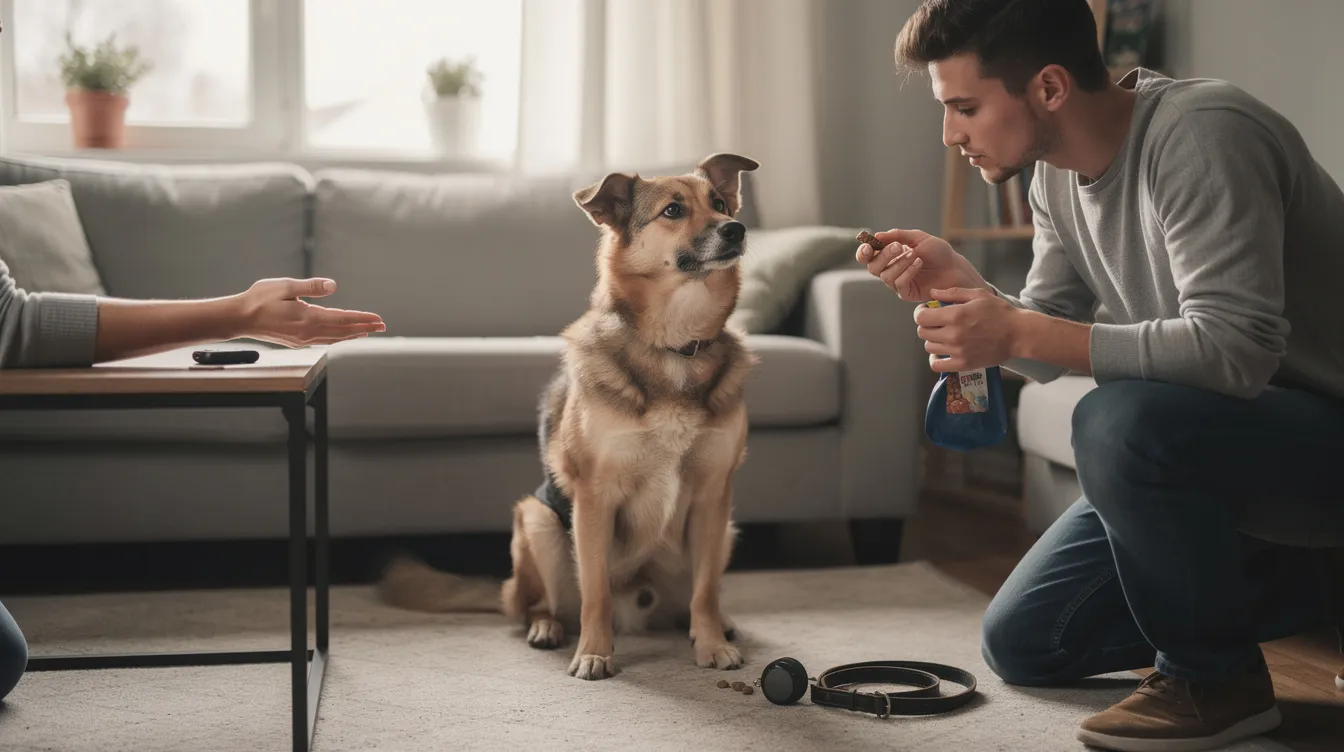
Dogs that respond to “sit” when you’re holding a treat but ignore the same command with empty hands have learned something different from what you intended. They learned that visible food is part of the instruction. The treat itself became a cue, not just a reward.
This is a training mechanics problem, not a stubbornness problem. Dogs learn behaviors through positive reinforcement with treats, and when the process goes wrong, visible treats can become cues for desired behaviors rather than consequences for them. The result: dogs may only listen when treats are visible or present.
This article covers why treat dependency develops, how bribery differs from proper reward timing, and how to rebuild obedience so your dog responds to your voice and hand signal alone. It’s written for dog owners who have noticed their dog only performs on command when food is in sight, and who want reliable listening in all situations.
The core issue: dogs become treat-dependent when food becomes part of the command cue rather than functioning as a consequence delivered after compliance. Luring occurs when a treat is shown before giving a command, and over time this trains the dog to wait for food before acting.
By the end of this article, you will understand:
- Why your dog’s nose and eyes fixate on treats instead of your commands
- How reward timing errors create selective listening
- A four-phase method to rebuild treat-free obedience
- How to use praise, play, toys, and life rewards as alternatives to food
- How to generalize commands across every location and distraction level
Understanding Treat Dependency in Dogs
Treat dependency is what happens when the presence of visible food becomes part of the behavioral cue. Instead of hearing “sit” and sitting, the dog waits to see the treat pouch open, the hand go into a pocket, or the smell of food before deciding to comply. The dog has learned a pattern: food appears, then a command happens, then compliance pays off. Remove the first step, and the chain breaks.
Dogs learn through association and pattern recognition. Every single time you reach for a treat bag before giving a command, you add another data point to the dog’s mental model: “hand in pouch = I should pay attention now.” Without that opening signal, the dog has no reason to engage.
The Science Behind Food Motivation
Food is a primary reinforcer. It satisfies a biological need, which makes it rewarding without any prior training. A dog’s reward-processing brain region (the caudate nucleus) activates in response to cues that predict food. A neuroimaging study found that dogs showed caudate activation within 20 to 30 trials when learning visual or odor cues predicting food, faster than verbal cues alone.
This connects directly to why treats work so well in training and why they become problematic. The dog’s brain is wired to seek food. When you pair a visual food cue with a command, the food cue registers faster and stronger than your voice. The dog’s body language shifts toward the food source, not toward you. That natural foraging drive, useful for survival, creates a training challenge: the dog tracks the treat, not the word.
When Treats Become Cues Instead of Rewards
A treat pouch clipped to your waist, a hand reaching into a pocket, the crinkle of a bag: all of these become environmental cues that predict reward availability. Over the course of many sessions, the dog builds a reliable mental model. Food present = commands matter. Food absent = commands are optional.
This is different from intentional training cues like a verbal command or a hand signal. Those are designed to trigger behavior. The treat pouch is accidental; you didn’t mean to teach the dog that the sight of food is the green light to obey. But dogs don’t distinguish between what you meant to teach and what you actually taught. They respond to established patterns.
Research on reinforcement timing makes this worse. A study on dog training in New Zealand found that only 27% of correctly executed commands received any reinforcement at all, and latency between correct behavior and reward delivery varied from 0 to over 5 seconds. That inconsistency teaches dogs to rely on the most reliable predictor of reward: seeing the food itself.
Understanding why this happens is the first step. The next is recognizing how your own training habits may be reinforcing the problem.
The Bribe vs. Reward Problem
The difference between a bribe and a reward comes down to sequence. Most dog owners who struggle with treat dependency are accidentally bribing, even when they believe they are rewarding.
What Constitutes a Bribe
A bribe is any instance where the dog sees, smells, or otherwise detects the treat before the behavior occurs. Examples:
- Holding a treat in front of your dog’s nose, then saying “sit.” The dog sits because of the food lure, not because of the word.
- Grabbing a treat to stop barking. The dog learns that barking produces treats.
- Reaching into a treat bag before giving a command. The bag opening becomes the real cue.
Using treats as bribes can lead to selective listening in dogs. The dog learns to scan for food before deciding whether to respond. No food in sight, no reason to perform. Dogs can become reliant on treats for obedience over time when every interaction begins with visible food.
Proper Reward Timing
The correct sequence: give the command, wait for the behavior, then deliver the reward. The treat stays hidden until after the dog completes the action. Consistent timing in marking and rewarding behavior is essential for successful training.
Use of a reward marker can help inform dogs when they have performed correctly. A marker word like “yes” or a clicker sound, delivered at the exact moment the dog sits, tells the dog which behavior earned the reward. This bridges the gap between the moment of compliance and the moment the treat arrives. Research on conditioned reinforcers found that verbal and clicker markers paired with food maintain behavior even when the primary reinforcer is briefly absent.
The goal: hide treats in a pocket or behind your back, give the command once, mark correct behavior immediately, then deliver the food reward from a location the dog couldn’t predict. This teaches the dog that the word is the cue and the food comes from anywhere, not just from a visible source.
Training Mechanics That Create Problems
Small physical habits create large training problems. Your hand position matters. If you always deliver treats from your right hand, the dog watches your right hand, not your face. If the treat pouch is on your hip, the dog’s eyes drift to your hip before you speak.
Remove accidental food cues by keeping your body language neutral when giving commands. Hands at your sides, treat pouch out of sight, food stored in a dish across the room or in a pocket the dog can’t see. Practice giving cues with the same body posture whether or not you have food on your person. This forces the dog to listen to your voice and watch your intentional hand signal rather than scanning your body for food clues.
With clean mechanics established, you can move to a structured plan for eliminating treat dependency.
Professional Training Solutions
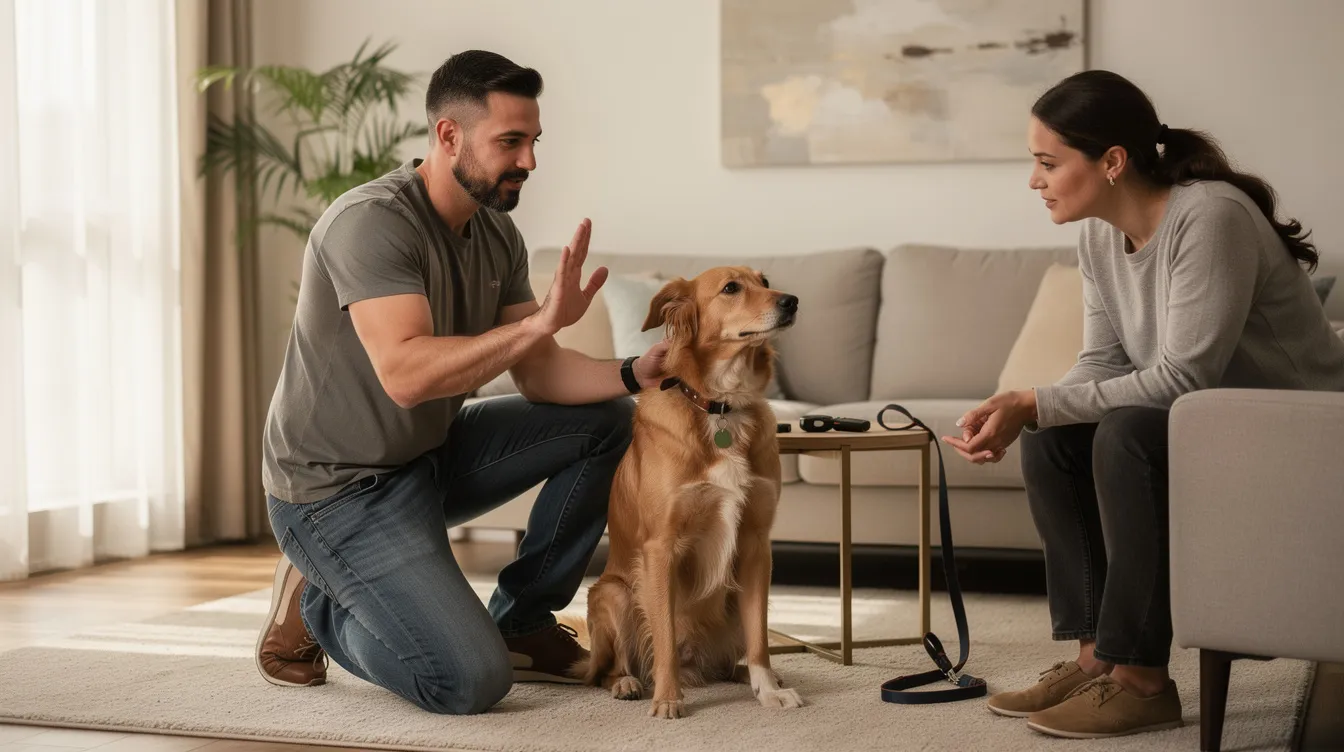
Fixing treat dependency requires a systematic approach. Random attempts to “just stop giving treats” often fail because the dog’s learned associations remain intact. A phased method works because it replaces old patterns with new ones.
The Three-Phase Correction Method
This method works for dogs at any stage of treat dependency. The phases build on each other, so skipping ahead tends to cause regression.
- Phase 1: Mechanics cleanup. Remove all accidental food cues from your training sessions. No treat pouch visible on your body. No reaching into pockets before commands. Hands empty when you give the cue. Start every repetition the same way: verbal cue or hand signal first, behavior second, reward from a hidden source third. This breaks the visual chain the dog relies on.
- Phase 2: Extinction trials. Test whether the dog responds without any food present. Give commands in situations where you genuinely have no food. The dog may hesitate, look confused, or offer other behaviors. This is normal. It is important to give commands only once and not repeat them if ignored. Wait. When the dog eventually offers the correct behavior, mark it and produce a reward from an unexpected location. Fading the lure helps prevent treat dependence in dogs by teaching them that listening is valuable even without visible rewards.
- Phase 3: Variable reinforcement schedules. Continuous reinforcement leads dogs to expect rewards every time they perform a command. Switch to intermittent, unpredictable reinforcement. Reward the third sit, then the first, then the fifth. Variable reinforcement helps maintain strong responses by rewarding unpredictably. Using random rewards strengthens good behavior in dogs because the dog never knows which repetition will pay off, keeping motivation high.
- Phase 4: Generalization. Training must be generalized across different environments to be effective. A dog that sits in your house may not sit at a park because the command was learned in one context. Dogs can learn to generalize cues across different environments, but this requires deliberate practice. Start in a quiet room, move to the yard, then a calm outdoor location, then a busier public space. Research suggests 8 to 10 different contexts before a command transfers reliably. Start with a 1:1 treat schedule before reducing visibility in each new location, then fade again.
For owners looking for structured support through this process, Off Leash K9 Training’s board and train programs build all four phases into a multi-week curriculum that covers low-distraction through real-world proofing.
Alternative Reinforcement Systems
Food is not the only thing dogs work for. Identifying what your dog values besides treats opens up a broader reinforcement toolkit. Praise can motivate dogs as effectively as treats, depending on the individual dog and context. A study comparing petting and vocal praise found that both 4-second and 30-second praise sessions maintained behavior above extinction levels, though food remained the stronger motivator for most dogs.
| Reinforcement Type | Best For | Implementation |
| Verbal Praise | Dogs who crave human attention | Enthusiastic voice, immediate timing after behavior |
| Physical Affection | Touch-motivated dogs | Petting, scratches, gentle handling as reward |
| Life Rewards | All dogs in real situations | Door access, leash freedom, walks, play time |
| Toy Play | High-drive working dogs | Tug games, fetch, interactive games as reward |
Life rewards include playtime, walks, and social interactions. The Premack principle uses high-probability behaviors as rewards for low-probability behaviors. Example: your dog sits before you open the door for a walk. The walk itself is the reward. No treat needed. Teach your dog that food can come from various sources, and that non-food reinforcement exists too.
To select the right alternative reinforcers, observe what your dog does when given free choice. Does she run for toys? Seek affection? Head for the door? Those preferences tell you what to use as reinforcement beyond food. Private lesson packages can help you identify your dog’s specific reward profile and build a custom plan.
Common Challenges and Solutions
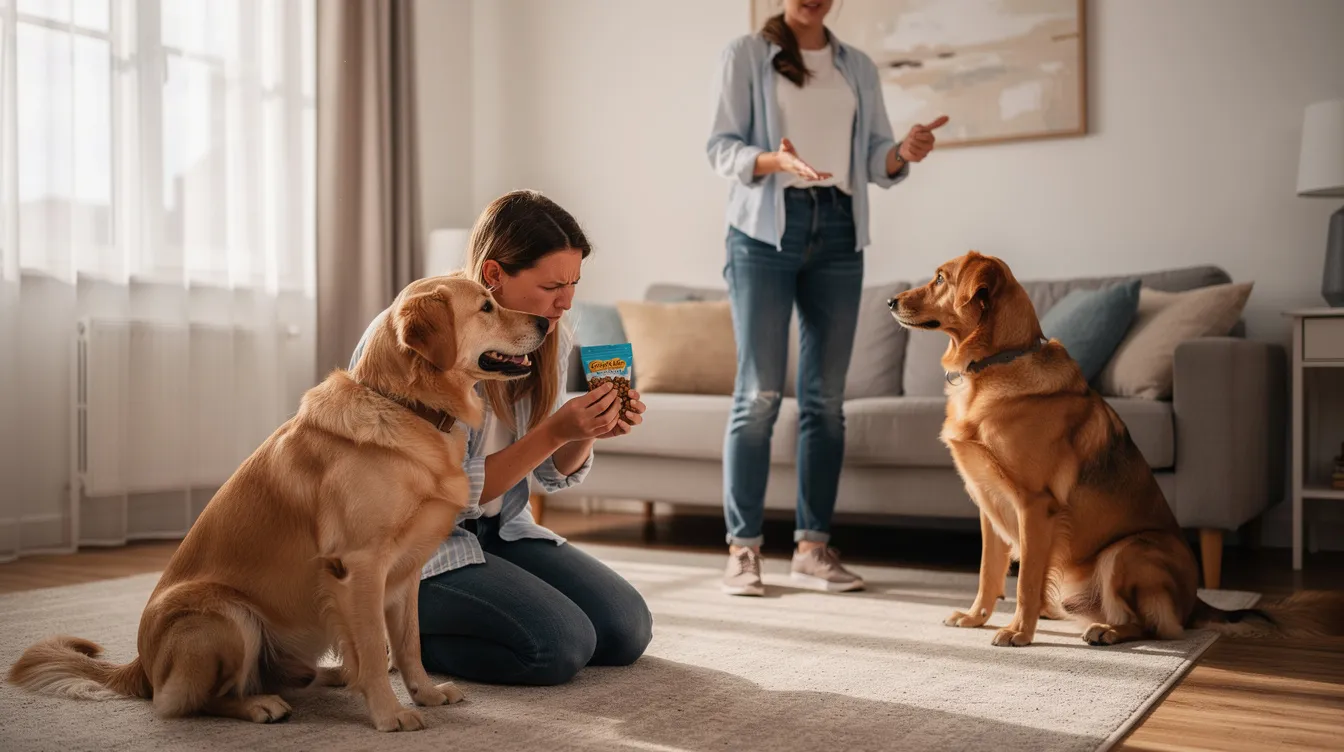
Three obstacles come up repeatedly when owners work on breaking treat dependency. Each has a direct fix.
Dog Won’t Respond Without Visible Treats
Dogs can learn to respond without visible treats present. Begin by hiding treats in multiple locations around the training area: on a shelf, in a pocket, in a dish across the room. Give the command with empty hands. When your dog sits, mark the behavior, then walk to one of the hidden locations and deliver the reward. The dog learns that food exists in the world but isn’t predictable from your body. Gradually make treats less visible during training sessions until the dog responds to voice and hand signal alone, with rewards appearing from unpredictable sources.
Use praise and play as rewards instead of visible treats during some sessions. Alternate between food reward sessions and praise-only sessions so the dog never knows which type it’s in, staying eager and attentive regardless.
Commands Work at Home But Not in Public
This is a generalization failure, not a disobedience problem. The dog learned “sit” in your house, in one room, with specific lighting and noise levels. Outdoors is a different world with new smells, sounds, and distractions.
Implement systematic generalization training across locations. Start in a low-distraction outdoor spot, like your front yard. Use higher-value treats at first; once the dog performs reliably, switch to variable reinforcement. Then move to a quiet park. Then a busier location. Each new environment is a fresh training context. Expecting your dog to perform at a farmer’s market the same way she’s been performing in your living room skips steps the dog needs.
Regression During Stressful or Exciting Situations
When a dog is excited or stressed, arousal floods the brain and overrides learned cues. A dog that sits perfectly at home may ignore everything at the vet’s office or when another dog approaches on a walk.
Temporarily return to food rewards in these high-difficulty situations. This isn’t a failure; it’s meeting the dog where she’s at. Rebuild the habit with frequent reinforcement in the challenging context, then fade treats again once the dog succeeds consistently. Build confidence through repetition of low-difficulty tasks in the stressful environment before asking for harder behaviors. If regression persists across multiple situations, behavior modification programs can address underlying anxiety or reactivity that interferes with obedience.
Conclusion and Next Steps
Dependency develops from training mechanics errors, specifically from letting visible food become part of the command cue. It resolves through clean sequencing (cue, behavior, then reward), fading food visibility, introducing variable reinforcement, and practicing across multiple environments.
Start here:
- Audit your current training habits. Note every point where your dog can see, smell, or hear treats before you give a command.
- Move treats out of sight. Use a pocket, a shelf, or a container across the room.
- Practice three sessions this week with empty hands. Mark correct behavior verbally, then deliver the reward from a hidden source.
- Add one new location per week for generalization practice.
If treat dependency persists after consistent work, or if you need off-leash reliability in distracting environments, professional guidance accelerates the process. A qualified dog trainer can identify the specific mechanical errors in your approach and build a customized plan for your dog’s reward profile.
Additional Resources
- Free phone consultation: Off Leash K9 Training of San Antonio offers consultations to assess your dog’s current training level and recommend next steps.
- 2-Week Board and Train: Intensive daily training that covers all four phases of treat dependency correction, including real-world proofing with distractions.
- Puppy Foundation Programs: For young dogs, building correct reinforcement habits from the start prevents treat dependency from developing.
- Case Studies: Examples of dogs that completed the transition from treat-dependent to reliable off-leash obedience.
