
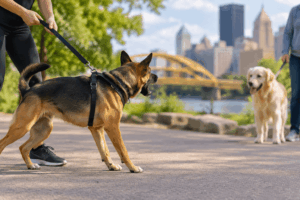
If your dog barks, lunges, or tenses up every time another dog comes into view, walks can start to feel more stressful than enjoyable. These reactive dog training tips are meant to help you understand what’s driving the behavior and give you practical, realistic ways to work through it, one walk at a time.
Progress with a reactive dog is usually gradual, not instant, and that’s normal. Small, consistent steps tend to matter more than any single technique.
What Does Dog Reactivity Mean?
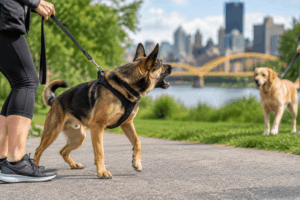
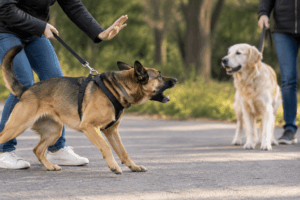
Reactivity refers to a dog that overreacts to certain triggers in their environment, often with barking, lunging, growling, or intense staring. It’s frequently mistaken for aggression, but the two aren’t the same. Aggression is typically intended to create distance or control a resource, while reactivity is often rooted in fear, frustration, or overexcitement rather than a genuine intent to harm.
Dog reactivity toward other dogs is one of the most common forms, though some dogs react to people, bikes, cars, or specific environments as well. Understanding reactivity as an emotional response, rather than simple disobedience, is the first step toward addressing it effectively.
Common Reasons Dogs React Around Other Dogs
Fear and Lack of Socialization
Dogs who weren’t well socialized as puppies, or who had limited positive exposure to other dogs, often find unfamiliar dogs unpredictable and unsettling. Barking and lunging can be a way of saying “stay back” rather than a desire to engage.
Frustration or Over-Excitement
Some reactive dogs aren’t afraid at all. They’re overly excited and frustrated that the leash is preventing them from greeting another dog. This is sometimes called barrier frustration, and it can look similar to fear-based reactivity from the outside, even though the underlying emotion is different.
Past Negative Experiences
A dog that was attacked, bullied, or had a frightening encounter with another dog may generalize that fear to dogs in general. One bad experience can have a lasting effect, especially without follow-up support to rebuild confidence.
Pain or Discomfort
Physical discomfort can lower a dog’s tolerance for stress and make reactive behavior more likely, even around triggers that didn’t previously bother them. If reactivity appears suddenly or worsens without an obvious cause, a veterinary checkup is a reasonable first step.
Practical Reactive Dog Training Tips
Identify Your Dog’s Threshold
Every reactive dog has a distance at which they can notice another dog without reacting, often called their threshold. Training works best below this threshold, where your dog is aware of the trigger but still able to think and respond to you. Start farther away than feels necessary and gradually decrease distance over time as your dog builds confidence.
Practice Focus and Engagement
Teaching your dog to check in with you on cue gives them an alternative to fixating on the trigger. Practice a simple “look” or name-response exercise in low-distraction settings first, rewarding eye contact generously. With repetition, this becomes a tool you can use the moment you spot a trigger approaching.
Use Counter-Conditioning
Counter-conditioning pairs the sight of a trigger with something your dog enjoys, usually high-value treats, to gradually change how they feel about it. Every time your dog notices another dog at a comfortable distance, reward calm behavior right away.
Over time, the goal is for your dog to associate other dogs with good things happening, rather than a threat to react to.
Reward Calm Behavior
It’s easy to focus only on stopping the reaction, but rewarding calm moments matters just as much. Praise or treat your dog when they notice a trigger and stay relaxed, even briefly. This reinforces the behavior you actually want to see more of.
Build a Predictable Routine
A consistent daily routine helps lower a dog’s overall stress and arousal levels, which can make them less reactive across the board. Regular exercise, mental stimulation, and calm decompression time, like sniffing on a long leash, all support a dog’s ability to stay level-headed in triggering situations.
Improving Handling and Communication
Read Your Dog’s Body Language
Dogs usually show signs of stress before a full reaction, such as stiffening, freezing, ears pinning back, or a lowered tail. Learning to recognize these early cues gives you a chance to create distance or redirect your dog before they reach a full reactive outburst.
Stay Calm and Confident on the Leash
Dogs are sensitive to tension traveling down the leash, and a tight grip or anxious posture from you can heighten your dog’s own stress. Try to keep your body relaxed, your movements smooth, and your voice calm, even if you feel nervous about an approaching trigger.
Avoid Forcing Interactions
Well-meaning greetings from other dogs or people can set a reactive dog back rather than help them. It’s okay to politely decline interactions, cross the street, or change direction to give your dog the space they need.
Mistakes Owners Should Avoid
A few common missteps tend to slow down progress with a reactive dog.
Punishing the Reaction
Yelling, leash corrections, or punishment after a reactive outburst can increase fear and anxiety, which often makes reactivity worse over time rather than better.
Exposing Your Dog to Too Much Too Soon
Flooding a reactive dog with triggers they aren’t ready for, like a busy dog park, can overwhelm them and undo progress made through slower, more controlled training.
Being Inconsistent
Reactive dog training relies on repetition. Inconsistent responses from different family members can confuse your dog and slow down learning.
Avoiding Triggers Entirely
While managing exposure is important, complete avoidance long-term doesn’t give your dog a chance to build new, calmer associations. The goal is controlled, gradual exposure, not permanent isolation from triggers.
Expecting Quick Results
Reactivity often took time to develop and typically takes time and consistency to improve. Comparing your dog’s timeline to another dog’s progress isn’t usually helpful.
When Professional Training May Be Helpful
Working through reactivity on your own is possible for many owners, but there are times when professional support makes a real difference. This includes situations where reactivity has progressed toward biting or a serious safety concern, where you’re unsure what’s triggering the behavior, or where you feel stuck despite consistent effort.
A professional trainer can help identify triggers you might be missing, tailor an approach to your specific dog, and guide you through the handling and timing that make counter-conditioning effective.
Every reactive dog progresses at their own pace, and there’s no shame in needing extra support along the way. If you’d like guidance building obedience, confidence, and calmer behavior around other dogs, reaching out to a professional trainer can help you put together a plan that fits your dog.
Frequently Asked Questions
Is Dog Reactivity the Same as Aggression?
No, reactivity and aggression are different, even though they can look similar in the moment. Reactivity is often driven by fear, frustration, or excitement, while aggression is generally aimed at creating distance or protecting a resource. Understanding which one you’re dealing with helps shape the right training approach.
How Long Does It Take to Help a Reactive Dog Stay Calm?
There’s no set timeline, since it depends on the dog, the root cause of the reactivity, and how consistently training is practiced. Some owners see noticeable improvement within weeks, while others work through the process over several months.
Steady, gradual progress is more realistic than expecting a quick fix.
Can Leash Reactivity Be Fixed Without Professional Help?
Many owners make meaningful progress with leash reactivity on their own using consistent management and training techniques. That said, more intense reactivity, or cases involving aggression, often benefit from professional guidance to ensure the approach is safe and effective.
Should I Avoid Walks Altogether If My Dog Is Reactive?
Avoiding walks entirely isn’t usually necessary or ideal, since your dog still needs exercise and mental stimulation. Instead, focus on managing distance from triggers, choosing quieter routes or times, and gradually working on training in controlled settings.
Will My Reactive Dog Ever Be Able to Be Around Other Dogs Calmly?
Many reactive dogs improve significantly with consistent training and can learn to stay calmer around other dogs over time.
Progress looks different for every dog, and the goal is often a calmer, more manageable response rather than complete elimination of the behavior.
