
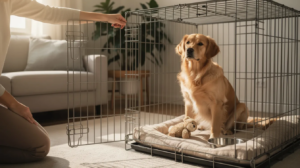
How long does it take to kennel train a dog? There is no fixed timeline. Some dogs become comfortable with a crate within several days, while others need several weeks or longer, especially if they have a history of fear, anxiety, or negative experiences with confinement.
The best measure of progress is not the calendar. It is whether your dog can enter willingly, remain calm, and gradually handle longer periods of confinement without significant distress. Puppies may need more frequent breaks because their bladder and bowel control is still developing, while adult dogs may need additional time if they have never used a crate or have developed negative associations with confinement.
This guide explains what affects kennel-training time, what realistic progress looks like, how to build duration safely, and what to do if your dog cries, resists the crate, has accidents, or becomes distressed.
If you are looking for travel-specific preparation, you can also review this guide to crate training for travel.
What Does It Mean to Be Kennel Trained?
Kennel training, often called crate training, is the process of teaching a dog to enter, remain in, and relax in a crate or other appropriate confinement space. In this article, “kennel” and “crate” refer to the home-training setup rather than a boarding facility.
A successfully crate-trained dog should be able to enter the crate willingly, remain comfortable with the door closed for an appropriate period, and settle without significant distress. The exact duration depends on the dog’s age, health, training history, individual needs, and comfort with confinement.
Crate training can be useful for everyday management, house training, travel, rest periods, and situations when you cannot safely supervise your dog. VCA describes comfortable confinement as an important life skill for puppies and dogs and recommends gradual, positive training rather than forcing a dog into a crate.
How Long Does Kennel Training Usually Take?
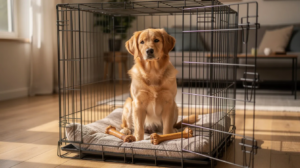
A realistic answer is days to several weeks for many dogs, with some requiring considerably longer.
There is no reliable calendar that tells you when every dog will be finished. Humane World for Animals notes that crate training can take days or weeks depending on age, temperament, and past experiences, while the AKC also emphasizes gradual progression and patience.
Your dog may progress faster or slower depending on:
- Age and developmental stage
- Previous crate or confinement experience
- Fear, anxiety, or separation-related behavior
- Bladder and bowel control
- Your consistency with training
- How quickly you increase duration
- The dog’s ability to relax when you leave the room
- Whether the crate has been associated with punishment or other unpleasant experiences
The important distinction is between learning to enter a crate and being comfortable spending meaningful time there. A dog might learn to walk into a crate on cue within a few sessions but still need additional training before it can calmly rest there while you are in another room.
Puppy vs. Adult Dog: Does Age Change the Timeline?
How Long Does It Take to Kennel Train a Puppy?
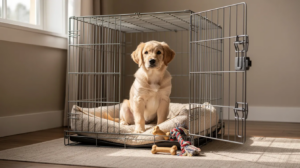
Puppies can begin crate training when they come home. Some become comfortable with short sessions within days, while others need several weeks to build confidence.
Young puppies have an additional limitation: bladder and bowel control is still developing. The AKC gives a general guideline of about one hour per month of age, while emphasizing that individual dogs vary. Treat this as a rough guideline rather than a target for every puppy.
VCA also recommends adjusting a puppy’s schedule to the individual dog. Very young puppies may need frequent nighttime potty trips, and crate training should progress gradually rather than according to a rigid calendar.
For puppies, focus first on:
- Entering the crate willingly
- Eating meals or receiving rewards near or inside the crate
- Accepting brief periods with the door closed
- Settling while you remain nearby
- Gradually handling short periods out of sight
- Increasing duration only when the puppy remains comfortable
Owners who want more structured guidance can review puppy training programs in San Antonio to compare current puppy-focused options.
How Long Does It Take to Kennel Train an Adult Dog?
Adult dogs can learn crate training at any age. Some become comfortable relatively quickly, while others need more time if they have never been crated or have developed negative associations with confinement.
Better bladder control may make daytime scheduling easier than it is with a young puppy, but emotional comfort still needs to be developed gradually. An adult rescue dog with a calm temperament may progress quickly, while another dog with a history of forced confinement may need a much slower approach.
For adult dogs, pay attention to behavior rather than assuming age determines the timeline.
What Factors Affect How Long Kennel Training Takes?
Previous Experiences
A dog that already views a crate as a safe resting space may need less introductory work. A dog that was previously punished or confined for long periods may need to rebuild trust.
Never use the crate as punishment. The AKC and veterinary behavior guidance both emphasize creating positive associations rather than forcing confinement.
Temperament and Individual Behavior
Some dogs naturally settle quickly. Others are more sensitive to changes in their environment, separation from their owners, or confinement.
Breed can influence general behavior and energy needs, but it should not be used to predict an exact kennel-training timeline. Individual history and response to training are more useful measures.
Owner Consistency
Consistent routines make it easier for your dog to understand what is expected. Use the same crate cue, reward calm behavior, and increase duration gradually.
The goal is not to force a certain number of minutes each day. The goal is to create successful repetitions that gradually build comfort.
Crate Setup
The crate should provide enough room for the dog to stand comfortably, turn around, and lie down. For growing puppies, an appropriately sized crate or adjustable divider can help maintain a suitable space as the puppy grows.
Place the crate where your dog can still feel connected to household activity without being overwhelmed by constant noise or traffic.
Step-by-Step Kennel Training Plan
Phase 1: Introduce the Crate
Start with the crate door secured open.
Place treats near the entrance and then gradually farther inside. Allow your dog to investigate voluntarily. Do not push the dog inside or immediately close the door.
You can also feed meals near the crate and gradually move the food farther inside as your dog becomes comfortable.
The goal is simple: the dog should begin to associate the crate with calm, positive experiences.
Phase 2: Add a Crate Cue
Once your dog willingly enters, introduce a consistent cue such as “kennel” or “crate.”
Say the cue as your dog begins moving toward the crate, then reward the dog for entering. Over time, the verbal cue can come before the movement.
VCA recommends adding the cue once the dog is already entering willingly rather than using the word before the behavior has been established.
Phase 3: Close the Door Briefly
When your dog is comfortable inside, begin closing the door for a few seconds.
Stay nearby. Reward calm behavior through the crate, then open the door before the dog becomes significantly distressed.
Gradually increase the duration. If your dog becomes uncomfortable, reduce the duration instead of pushing forward.
Phase 4: Add Distance
Once your dog can relax with the door closed, begin moving away.
Start by taking one or two steps away. Return and reward calm behavior. Then gradually move farther away or briefly leave the room.
Do not increase every variable at once. If you add distance, keep the duration short. If you increase duration, stay closer.
Phase 5: Practice Short Absences
Before leaving your dog crated while you are gone, practice very short periods out of sight.
You can use a camera during early absences to determine whether your dog settles after you leave or shows signs of distress. VCA specifically recommends monitoring early alone-time sessions for signs that the dog is not comfortable.
Only increase the absence when your dog is consistently calm at the current level.
How Long Can a Dog Stay in a Crate?
Crate-training time and crate-confinement time are not the same thing.
A dog learning to accept a crate may practice for short periods several times a day. That does not mean the dog should immediately spend hours confined.
For puppies, bathroom needs are an important limiting factor. The AKC’s general age-based guideline can help establish a starting point, but individual puppies may need more frequent breaks.
Humane World for Animals also cautions that puppies under six months should not remain in a crate for more than three or four hours at a time and emphasizes that dogs need exercise and interaction outside the crate.
For adult dogs, avoid treating the maximum possible duration as a daily target. Dogs need regular opportunities for exercise, social interaction, bathroom breaks, and time outside confinement.
If you work long hours, consider a midday dog walker or pet sitter rather than expecting your dog to remain crated for most of the day.
What If My Dog Whines or Barks in the Kennel?
Some brief vocalization can occur during adjustment, but not all whining means the same thing.
First, consider whether your dog needs to eliminate, especially if the dog had been sleeping quietly and suddenly becomes restless. Young puppies may genuinely need an overnight potty break.
If the dog is showing escalating distress, heavy panting, excessive drooling, frantic escape attempts, or persistent vocalization, do not assume the dog is simply being stubborn. VCA recommends changing the training plan when a dog becomes significantly distressed.
The best response is to identify what changed and make the next session easier.
You may need to:
- Reduce crate duration
- Stay closer to the crate
- Return to open-door practice
- Improve the positive association with the crate
- Provide an appropriate food toy or chew when safe
- Rule out a potty need
- Consult a veterinarian or behavior professional if distress continues
ASPCA guidance similarly notes that a crate can help some dogs but can increase stress for others, particularly dogs showing strong distress when left alone.
What If My Dog Tries to Escape?
Escape attempts are a safety concern.
A dog that is frantically chewing bars, bending the crate, injuring its paws, or repeatedly throwing itself against the door should not simply be left to “work it out.”
Stop increasing the difficulty and reassess the setup. The problem may be confinement distress, separation-related anxiety, fear, or another issue that requires a different approach.
A puppy-proofed room or exercise pen may be more appropriate for some dogs while you work on the underlying problem. VCA identifies exercise pens and baby-gated areas as alternatives to traditional crate confinement.
What If My Dog Has Accidents in the Crate?
Accidents do not automatically mean your dog is failing at crate training.
First check whether the crate session was too long for the dog’s age and individual needs. Puppies in particular need frequent opportunities to eliminate.
Make sure the crate is appropriately sized and that your dog has had an opportunity to eliminate before a longer session.
Clean accidents thoroughly so lingering odor does not encourage repeat soiling. If accidents are frequent, sudden, or continue despite an appropriate routine, speak with your veterinarian to rule out a medical issue. The potty-training timeline guide can also help you review the broader house-training process.
Common Mistakes That Slow Kennel Training
Moving Too Fast
One of the most common mistakes is increasing duration before the dog is ready.
If your dog was comfortable for five minutes but becomes distressed at ten, return to a shorter duration and build from there.
Using the Crate as Punishment
The crate should not become associated with scolding or isolation after unwanted behavior.
Reward-based training creates a more positive association and is consistent with the current position of the American Veterinary Society of Animal Behavior, which recommends reward-based methods for dog training.
Only Using the Crate When You Leave
If every crate session happens immediately before you leave the house, your dog may begin to associate the crate with your departure.
Include short, calm crate sessions while you are still home so the crate is part of normal daily life.
Ignoring Distress
Brief adjustment is different from panic.
If your dog is showing significant distress, continuing to increase duration can make the situation worse. Reduce the difficulty and seek professional help when necessary.
How Do You Know Your Dog Is Progressing?
Instead of asking whether your dog has been training for one week, two weeks, or six weeks, look for behavioral milestones.
Signs of progress include:
- Your dog enters the crate voluntarily.
- Your dog accepts the door closing without escalating distress.
- Your dog can settle while you remain nearby.
- Your dog can tolerate brief periods when you leave the room.
- Your dog rests rather than constantly watching the door.
- Your dog maintains calm behavior as duration gradually increases.
- Your dog can use the crate as part of a normal daily routine.
These milestones are more meaningful than a specific calendar date.
When to Consider Professional Help
If your dog continues to show significant fear, panic, escape attempts, self-injury, or an inability to settle despite gradual training, seek professional guidance rather than continuing to increase crate time.
Some dogs need a behavior plan that addresses fear, anxiety, separation-related distress, or confinement sensitivity before longer crate sessions are appropriate. Merck Veterinary Manual notes that separation anxiety can involve vocalization, pacing, destruction, elimination, and attempts to escape confinement and may require behavior modification and veterinary support.
For owners who want structured instruction, dog obedience training in San Antonio can provide broader obedience foundations and owner education.
Off Leash K9 Training of San Antonio offers Board & Train programs focused on obedience, manners, and practical skills. Certain puppy-focused programs also reinforce crate-training and potty-training habits. However, kennel-training completion within a specific number of days is not guaranteed.
Dogs with more serious behavior concerns may need a more specialized approach. Off Leash K9 Training of San Antonio currently offers behavior modification training for qualifying dogs dealing with aggression, reactivity, anxiety, and related behavior concerns.
FAQs
Can I kennel train a dog in a weekend?
You can make meaningful progress over a weekend, especially with crate introduction, treats, meals, and brief door-closed sessions. However, a weekend should be viewed as a starting point rather than a guarantee that your dog will be comfortable with longer confinement or alone time.
How long does it take to kennel train a puppy?
Some puppies become comfortable with short crate sessions within days, while others need several weeks or longer. Age, temperament, previous experience, bladder control, and your training consistency all affect the timeline.
Can you kennel train an older dog?
Yes. Crate training can begin at any age. Adult dogs may learn quickly, but dogs with negative confinement experiences may need a slower progression.
How long should a puppy stay in a kennel?
There is no single duration that fits every puppy. Use age and bladder development as a starting point, provide frequent bathroom opportunities, and adjust the schedule based on your puppy’s individual needs. The AKC’s age-based guideline is useful as a general reference, not a promise that every puppy can comfortably wait that long.
Should I let my dog cry it out in the kennel?
Do not treat all crying the same way. Brief whining may occur during adjustment, but persistent or escalating distress, heavy panting, drooling, frantic escape attempts, or inability to settle indicate that the training may be progressing too quickly. Check for a potty need and reduce the difficulty when necessary.
Does crate training help with separation anxiety?
A crate can provide a safe resting area for some dogs, but it is not a treatment for separation anxiety. In some dogs, confinement can increase distress. Dogs showing significant separation-related anxiety may need a behavior plan and veterinary or veterinary behavior support.
Does Board & Train guarantee faster kennel training?
No specific kennel-training timeline should be assumed. Off Leash K9 Training of San Antonio offers Board & Train programs that include structured training and, in applicable programs, crate-training support, but the published program information does not guarantee that kennel training will be completed within a particular number of days.
Conclusion
So, how long does it take to kennel train a dog?
For many dogs, the process takes days to several weeks, but there is no universal deadline. Puppies may need additional time because of developing bladder control, while adult dogs with negative confinement experiences may require a slower approach.
The most reliable way to build kennel skills is to start with voluntary entry, create positive associations, close the door for short periods, gradually add distance, and increase duration only when your dog remains comfortable.
Watch behavior rather than the calendar. If your dog is calm, entering willingly, settling more easily, and handling gradually longer sessions, you are moving in the right direction. If your dog is panicking, trying to escape, injuring itself, or becoming increasingly distressed, stop increasing the difficulty and seek appropriate professional guidance.
For San Antonio owners who want individualized help, you can contact Off Leash K9 Training of San Antonio for a consultation to discuss your dog’s age, training history, behavior, and goals.
For additional veterinary guidance, the AKC’s crate-training guide and VCA’s crate-training guidance provide further information on crate setup, gradual training, duration, and signs of distress.