
You sit down for dinner, and your dog immediately appears beside your chair. They stare at your plate, rest their head on your knee, or paw at your arm. If you ignore them, they might start whining or walking around the table looking for someone willing to share.
Begging can seem harmless at first. But when it becomes a daily habit, mealtimes can feel frustrating for everyone.
To stop a dog from begging at the table, stop rewarding begging with food or attention, establish consistent household rules, and teach your dog an alternative behavior, such as settling on a designated mat. Practice the new routine before expecting your dog to remain calm throughout an entire meal.
For dog owners in San Antonio, Texas, these steps can help create more comfortable family meals and better everyday household manners.
Why Do Dogs Beg at the Table?
Dogs often beg because they have learned that approaching people during meals can produce something rewarding.
That reward might be food, attention, or even a brief interaction.
Understanding what maintains the behavior is important because begging does not always mean your dog is hungry.
Your Dog Has Been Rewarded Before
Dogs learn through experience.
If your dog receives a piece of chicken after staring at someone during dinner, they may try the same behavior the next time food appears.
Even occasional rewards can maintain begging.
For example, your dog might approach the table during ten meals and receive food only once. That single successful attempt can still encourage them to keep trying.
This is why consistency matters.
Food Smells Are Difficult to Ignore
Dogs have a strong sense of smell.
Freshly prepared meat, vegetables, and other foods may attract their attention even after they have eaten their own meal.
Interest in human food does not necessarily indicate inadequate nutrition.
Begging Can Become an Attention-Seeking Habit
Some dogs learn that approaching the table results in interaction.
They might receive:
- Eye contact
- Petting
- Verbal attention
- A playful response
- Food from someone’s plate
Even when the owner intends to discourage begging, the interaction may still reinforce the behavior.
Household Rules Are Inconsistent
Begging is harder to address when family members have different expectations.
One person may ignore the dog while another regularly shares food.
Your dog cannot be expected to understand a rule that changes depending on who is eating.
Everyone in the household should agree on the same approach.
How to Stop a Dog From Begging at the Table: 6 Training Steps
Begging usually improves when owners combine consistent management with training.
The goal is to teach your dog what to do during meals instead of simply telling them what not to do.
Step 1: Stop Feeding Your Dog From the Table
The first step is making sure begging no longer produces food.
Ask everyone in your household to stop giving your dog food directly from their plates during meals.
This includes small scraps offered because the dog looks hungry or gives someone a pleading expression.
If you want to provide a dog-safe food treat, offer it separately from the family’s mealtime routine.
For example, you could use appropriate food rewards during a training session or offer a veterinarian-approved treat in your dog’s feeding area.
The distinction matters.
Your dog should learn that hovering beside the dinner table does not produce food.
Avoid assuming that one small piece cannot make a difference.
Inconsistent rewards are one reason unwanted behaviors can persist.
Step 2: Decide Where Your Dog Should Stay During Meals
Choose a realistic alternative to begging.
For many dogs, this might involve:
- Resting on a dog bed
- Settling on a mat
- Relaxing in another room
- Remaining comfortably behind a pet gate
- Spending mealtime in a properly introduced crate
Select an arrangement appropriate for your dog’s age, comfort, and training experience.
A dog that has never practiced settling for several minutes should not immediately be expected to stay on a mat throughout a long family dinner.
Begin with a manageable goal.
For example, your dog might initially remain on their mat for only a few seconds.
Reward that success and gradually increase the duration.
Step 3: Teach the Place Command
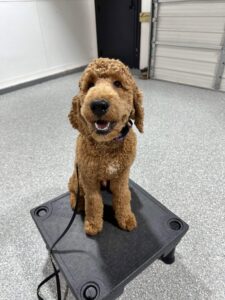
The Place command teaches your dog to move to a designated location and remain there until released. This can provide a clear alternative to approaching the dining table during meal preparation and family dinners.
Begin with short durations and gradually build your dog’s ability to remain comfortably in position.
Start when no one is eating.
How to teach your dog to go to Place:
- Choose a comfortable mat or dog bed.
- Stand near the mat with several small treats.
- Reward your dog for approaching it.
- Reward them again when they step onto it.
- Gradually encourage them to remain on the mat.
- Introduce a consistent verbal cue once they understand the behavior.
- Practice a release cue so your dog knows when they may leave.
Keep early sessions short.
When your dog comfortably goes to their mat, practice taking a few steps away.
Return and reward them for remaining there.
Gradually add distractions, such as someone walking across the room or sitting at the dining table.
The American Kennel Club’s Place training guidance explains how a designated mat can give dogs a useful alternative behavior during everyday household activities.
Step 4: Reward Calm Behavior Before Begging Begins
Timing is important.
If your dog walks toward the table and begins whining, repeatedly offering treats to make them stop may accidentally reinforce that sequence.
Instead, reward appropriate behavior before begging develops.
For example:
- Reward your dog for choosing their mat.
- Reward them for remaining relaxed.
- Reward calm waiting while someone sits at the table.
- Reward them for responding to familiar cues.
Deliver rewards calmly.
If your dog becomes excited whenever you approach with a treat, simplify the exercise.
You can begin by rewarding a few seconds of quiet behavior before gradually increasing the time between rewards.
The goal is to establish a predictable routine.
Step 5: Practice With Small Mealtime Distractions
Once your dog understands Place, begin introducing activities associated with eating.
Start with easy situations.
For example:
- Ask your dog to go to their mat.
- Sit at the table without food.
- Reward your dog for remaining calm.
- Stand up and sit down again.
- Place an empty plate on the table.
- Gradually introduce a small snack.
- Build toward an ordinary meal.
If your dog repeatedly leaves the mat, reduce the difficulty.
You may need to practice a shorter duration or move the mat farther from the dining area.
Avoid deliberately placing tempting food within your dog’s reach.
You want to create opportunities for success, not test whether your dog will make a mistake.
Step 6: Follow the Same Routine Every Day
Consistency helps your dog recognize what is expected.
Before meals:
- Allow your dog to meet their basic needs.
- Prepare their designated resting area.
- Offer an appropriate activity if needed.
- Ask for a familiar behavior.
- Reward calm behavior during practice.
Keep the routine simple enough for everyone in the household to follow.
If your dog struggles during a busy family gathering, use a gate or another comfortable management arrangement.
You can return to training when the environment is quieter.
What Should You Do When Your Dog Begs During Dinner?
If your dog approaches the table and starts begging, avoid turning the situation into an extended interaction.
Do not repeatedly lecture them or offer food to make them leave.
When possible, ask your dog to go to Place before the family begins eating, then reward them for remaining comfortably in position.
If begging has already started, calmly redirect your dog without offering table scraps or unnecessary attention. Reinforce appropriate behavior once they have settled, and practice the routine earlier during future meals.
If your dog cannot settle, consider giving them a comfortable break in a separate area.
This is particularly useful when:
- Several guests are eating
- Children are dropping food
- A special meal creates additional excitement
- Your dog has not yet mastered the routine
Management is not a training failure.
It prevents your dog from repeatedly practicing begging while their new habits are still developing.
Common Mistakes That Reinforce Dog Begging
Giving Food Occasionally
One family member offering scraps can make the household rule difficult to maintain.
Consistency is more important than the amount of food offered.
Responding to Every Whine
Some dogs beg by whining rather than approaching the table.
Repeatedly speaking to or touching the dog may provide the attention they are seeking.
Teach and reward an appropriate alternative behavior instead.
Expecting Too Much Too Soon
A dog that has begged for years may need repeated practice before developing a reliable mealtime routine.
Begin with short sessions and manageable distractions.
Punishing Your Dog for Begging
Shouting, pushing, or physically intimidating your dog can create stress without clearly teaching an alternative behavior.
Focus on preventing unwanted rewards and reinforcing appropriate choices.
Assuming Begging Always Means Hunger
A dog can be interested in food even after receiving an adequate meal.
However, if your dog suddenly becomes unusually hungry, loses weight, or changes their eating habits, consult your veterinarian.
Medical conditions and nutritional concerns should not be dismissed as training problems.
Should You Feed Your Dog Before the Family Eats?
Feeding your dog before dinner may help establish a predictable routine, but it is not a guaranteed solution.
Some dogs continue begging even after eating.
That happens because begging may be driven by learned rewards rather than hunger.
You can experiment with a consistent feeding schedule appropriate for your dog’s needs.
Avoid repeatedly changing meals or adding extra food simply to reduce begging.
If you are unsure whether your dog’s diet is appropriate, consult your veterinarian.
Training should complement good nutrition, not replace it.
How Long Does It Take to Stop a Dog From Begging?
There is no fixed timeline.
Some dogs begin showing improvement after several consistent practice sessions.
Others may need weeks or longer, particularly if begging has been reinforced for years.
Factors affecting progress include:
- How often your dog previously received table scraps
- Whether everyone follows the same rules
- Your dog’s experience with obedience training
- How frequently you practice Place
- The amount of distraction during meals
- Your dog’s ability to settle comfortably
Progress may not be perfectly consistent.
Your dog might remain calm during a quiet weekday dinner but struggle when several visitors arrive.
That does not mean the training has failed.
Return to an easier exercise and continue reinforcing the behavior you want.
Can Older Dogs Learn to Stop Begging?
Yes.
Older dogs can learn new household routines.
However, established habits may require more repetition because the dog has practiced them for a long time.
Start with realistic expectations.
A senior dog may also need a comfortable resting surface and shorter training sessions.
If your dog has mobility problems, avoid requiring uncomfortable positions.
For some dogs, relaxing on a bed may be more appropriate than maintaining a formal Sit.
The goal is comfortable, manageable behavior during meals.
Teaching Better Table Manners in San Antonio Homes
Family meals provide regular opportunities to reinforce impulse control and obedience.
For households in San Antonio, Helotes, Leon Valley, Alamo Heights, and nearby communities, these skills can make everyday routines more predictable.
Prepare Before Family Gatherings
If guests are coming over, decide where your dog will stay during the meal.
Do not assume that a dog who settles during quiet dinners will respond the same way around unfamiliar visitors.
Teach Children Consistent Rules
Children may be tempted to share food with a dog that begs.
Explain why everyone should follow the same feeding routine.
Supervise interactions between young children and dogs, especially around food.
Practice Calm Behavior Around Food
Start with low-distraction exercises.
Gradually practice while preparing snacks, moving dishes, and sitting at the table.
Build on Basic Obedience
Skills such as Sit, Down, Place, Come, and a clear release cue can support better household manners.
For information about foundational training, explore dog training options in San Antonio.
The same skills can help during other everyday activities, including greeting visitors and settling when the household becomes busy.
Preparing Your Dog for San Antonio’s Dog-Friendly Patios
San Antonio has outdoor dining environments where dogs may be permitted.
However, a dog that begs persistently at home may struggle to settle when surrounded by unfamiliar food smells, people, and distractions.
Before bringing your dog to a restaurant patio, practice:
- Remaining on a mat
- Walking calmly on leash
- Ignoring dropped food
- Staying out of walkways
- Settling around movement
- Responding to familiar cues
Begin in easier environments before expecting your dog to remain calm at a busy restaurant.
Bring water, choose a suitable time, and always follow the establishment’s current pet policies.
You can also review the AKC’s guidance on preparing dogs for restaurant visits.
When Should You Consider Professional Dog Training?
Consider additional guidance if:
- Begging continues despite consistent household rules.
- Your dog becomes highly excited around meals.
- Your dog struggles to respond to familiar commands.
- Multiple unwanted behaviors occur around food.
- You need help teaching reliable household manners.
- Your dog guards food or behaves defensively when approached.
Food guarding is different from ordinary begging.
If your dog stiffens, growls, snaps, or attempts to bite around food, stop any exercises that involve approaching or removing food and seek qualified behavioral guidance.
San Antonio owners can explore the dog obedience training programs to develop foundational skills such as Sit, Place, Down, and responding to a release cue. Training methods and included skills vary by program, so review the available options before enrolling.
Frequently Asked Questions About Dogs Begging at the Table
Why does my dog beg even after eating?
Dogs may beg because they have learned that approaching the table sometimes produces food or attention. Begging does not automatically mean your dog is hungry.
How do I stop my dog from begging for food?
Stop giving food from the table, establish consistent household rules, and reward an alternative behavior such as resting on a designated mat.
Should I ignore my dog when they beg?
Avoid rewarding begging with food or unnecessary attention. However, ignoring the behavior alone may not be enough. Teaching a positive alternative can make expectations clearer.
Can the Place command stop dog begging?
Place can help by giving your dog a predictable location to remain during meals. Begin practicing without food distractions and gradually introduce normal dining activities.
Is it okay to give my dog human food?
Some human foods are safe for dogs in appropriate amounts, but others are harmful. Ask your veterinarian about suitable foods and portions. If you offer an approved treat, give it separately from begging at the table.
How long does it take to train a dog not to beg?
The timeline varies. Some dogs improve after several consistent sessions, while others need longer to change established habits.
Can puppies learn not to beg at the table?
Yes. Puppies can begin learning appropriate household routines through brief, reward-based exercises. Keep expectations suitable for their age and development.
Build Better Mealtime Manners Through Consistent Training
Begging at the table is often a learned habit, but it can improve when owners establish clear rules and reward better alternatives.
Start by making sure begging no longer produces food.
Then teach your dog to settle on a mat or bed, practice during easy mealtime situations, and gradually introduce distractions.
Remember that everyone in the household needs to follow the same routine.
With patience and consistency, your dog can learn that family meals are a time to relax rather than search for scraps.
For San Antonio dog owners who need help with impulse control, obedience, or everyday household manners, explore available dog training programs or contact the San Antonio training team to discuss your dog’s needs.