

Your puppy’s first night at home will likely be the most challenging night for both of you – but with the right preparation, it doesn’t have to be stressful. When a new puppy aged 8–16 weeks arrives at your house, it’s experiencing a major emotional and physiological transition: separation from its mother and littermates, unfamiliar smells, strange sounds, and a completely new environment. How you handle these first hours sets the foundation for sleep habits, house training, and the bond you’ll share for years to come.
This guide covers everything you need to know about bringing a new pup home – from essential supplies and room setup to a step-by-step evening routine and troubleshooting the most common overnight problems. It’s written specifically for new dog owners in San Antonio who want professional, science-backed guidance for making this exciting time as smooth and stress-free as possible.
Here’s the short answer: Your puppy should sleep in a crate or enclosed safe space in your bedroom, with comfortable bedding and a comfort item that smells like their mother or littermates. Expect 2–3 potty breaks during the night, some whining, and very little uninterrupted rest. Young puppies require a significant amount of sleep – often 16–18 hours a day – but that sleep is fragmented, especially during the first few nights.
By the end of this guide, you’ll know how to:
- Set up a comfortable space that helps your puppy settle quickly
- Follow a proven evening routine that reduces anxiety and promotes puppy sleep
- Respond correctly to overnight crying, potty needs, and restlessness
- Build the foundation for successful crate training and potty training
- Recognize when challenges require professional training support
Understanding Your Puppy’s First Night Needs
When your puppy arrives in its new home, it’s dealing with a level of stress that’s easy to underestimate. For the first 8 weeks of life, your pup relied entirely on the warmth, scent, and presence of its mother and littermates. That entire support system disappears in a single car ride. Understanding what your puppy is going through physically and emotionally is the first step toward a successful first night.
Whining and crying are normal reactions for puppies adjusting to a new environment. Puppies may feel overwhelmed in their new surroundings, showing signs like pacing, whimpering, or needing frequent potty breaks. These are temporary stress responses – not signs that something is seriously wrong.
Separation Anxiety and Adjustment
The reason most puppies cry on their first night home isn’t defiance or bad behavior – it’s disorientation. Your new puppy has lost every familiar anchor: the scent of its mother, the warmth of its siblings, the sounds and routines of its first weeks of life. This triggers elevated cortisol (stress hormones), which causes crying, pacing, and restlessness.
The good news is that most puppies begin adjusting over 3–7 days. By the end of the first week, essentials like sleeping in a crate, recognizing a consistent routine, and beginning to feel secure in the new environment are typically underway. Puppies may cry for several nights after arriving home, and that’s entirely expected.
However, without a thoughtful first night setup, temporary stress can develop into chronic issues – distrust of the crate, fear of being alone, and persistent night waking that extends well beyond the first few weeks. That’s why getting the first night right matters so much for long-term behavioral health.
Physical Comfort Requirements
Young puppies have immature thermoregulation, meaning they can’t efficiently manage their own body temperature. A warm sleep area – ideally between 65–75°F – with soft, washable bedding helps replicate the warmth they’d get from littermates. Avoid loose stuffing that can be chewed and ingested, and ensure adequate ventilation so your pup doesn’t overheat, especially during San Antonio’s warmer months.
Bladder capacity is the other major physical factor. The general rule is that a puppy can hold its bladder for roughly its age in months plus one hour during the day. Puppies aged 8–10 weeks need potty breaks every 2 hours during active periods. Overnight, puppies can typically hold their bladder for 4–6 hours when calm and sleeping – but many young puppies cannot hold their bladder through the entire night until they’re 4–5 months old. Puppies need frequent potty breaks, especially at night.
These physical realities directly shape the preparation you’ll need to do before your puppy’s first night – which is exactly where we’ll turn next.
Essential Pre-Arrival Preparation
The best way to reduce first-night chaos is to prepare before your puppy arrives. When you have all the supplies ready, the sleep space set up, and hazards removed, you can focus entirely on helping your new pup feel comfortable rather than scrambling for essentials at 11 PM.
Must-Have Supplies Checklist
Gather all the supplies before your puppy comes home. Here’s what you need:
- Crate: Appropriately sized so your puppy can stand, turn around, and lie down comfortably – but not so large that one corner becomes a potty spot. If you’re buying an adult-size crate now, use a divider panel to adjust the space as your puppy grows.
- Bedding: A soft, washable crate pad or blanket. Provide a cozy bed and blankets in the crate. If possible, ask the breeder for a blanket or cloth with the mother’s scent – this comfort item that smells like their mother can dramatically reduce first-night stress.
- Food and water: Bring the same food your puppy has been eating to avoid digestive upset. Transition to a new brand gradually over 5–7 days if desired. Puppies under 14–18 weeks need three meals daily.
- Collar with ID tag and leash
- Safe chew toys and interactive toys: Providing toys can create positive associations for your puppy with its new space.
- Puppy-proofing supplies: Baby gates, cord covers, outlet protectors
- Enzymatic cleaner: For inevitable potty accidents
Creating the Perfect Sleep Space
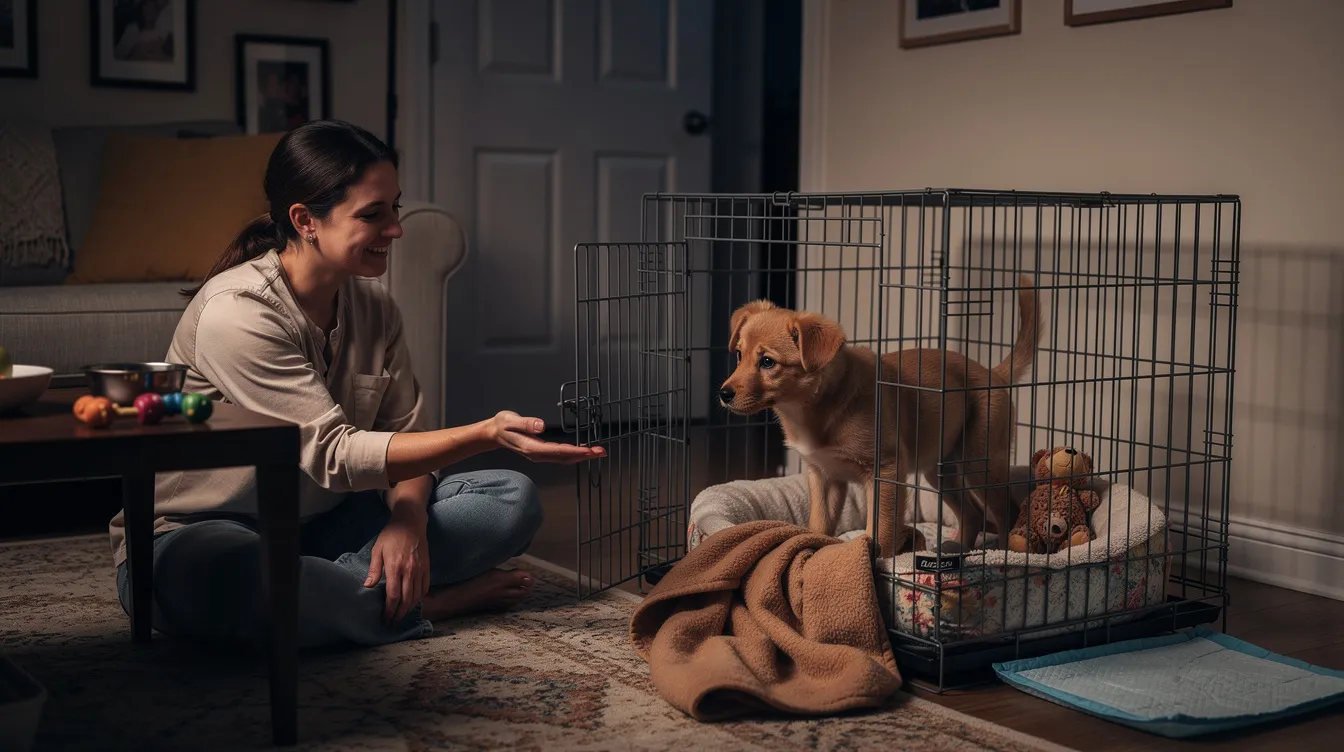
Place the crate in your bedroom for comfort. Sleeping in the same room reduces puppy anxiety significantly – your pup can hear you breathe, smell your presence, and feel less isolated. Over the first few weeks, you can gradually move the crate to its permanent location if desired.
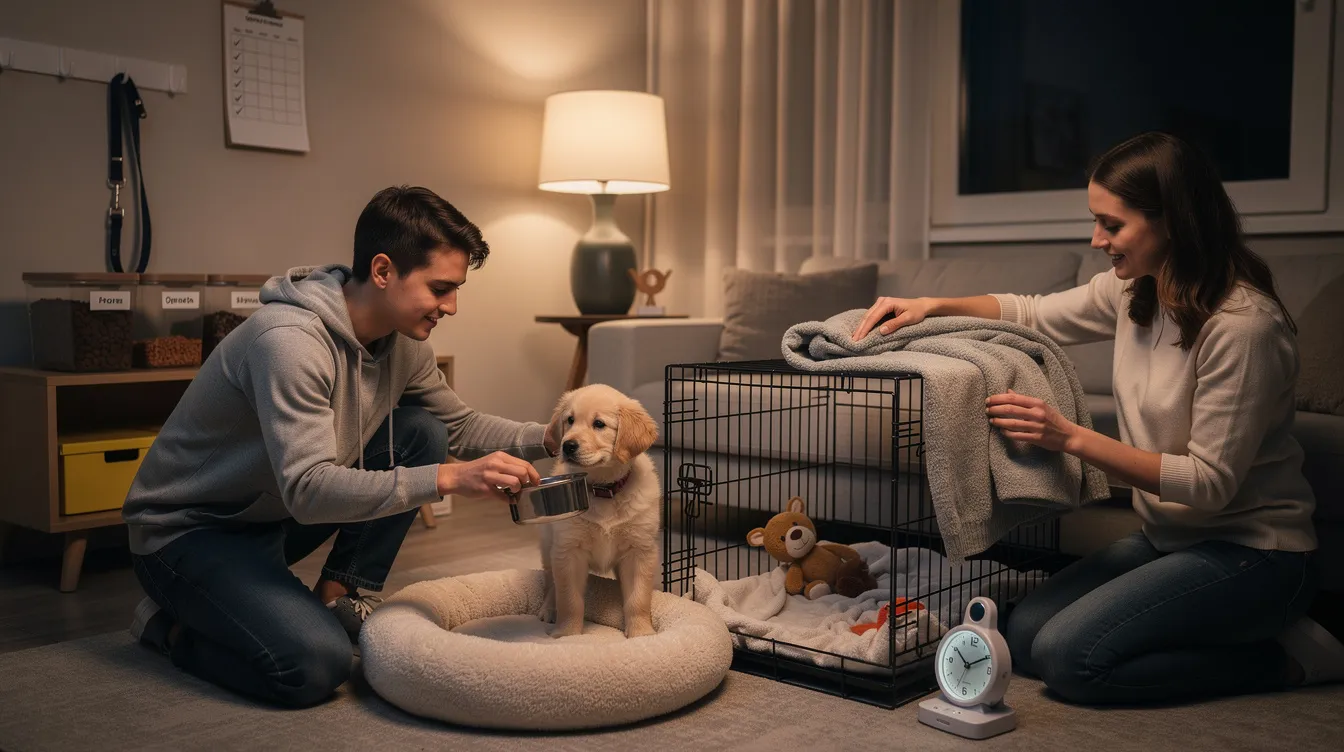
Create a comfortable crate setup for the puppy’s sleep space by lining it with soft bedding and adding a comfort item. Use a shirt with your scent in the crate to provide additional reassurance. A ticking clock placed near the crate can mimic the presence of littermates and provide comfort, and a heartbeat-simulating toy serves a similar purpose.
For families not using crates, a closed playpen or a puppy’s bed in an enclosed corner can work as an alternative – the key is creating a den-like safe place rather than leaving a young puppy loose on an open floor. That said, crate training is recommended for all puppies. Crates provide a haven for nervous puppies and help with housetraining, as dogs naturally avoid soiling their sleeping area.
Puppy-Proofing Your Home
Before your new dog sets a single paw on the floor, you need to puppy-proof your house thoroughly. Common hazards include:
- Electrical cords and exposed wires – tuck away or cover with cord protectors
- Toxic plants – in San Antonio, watch especially for oleander and sago palm
- Cleaning supplies and medications – store behind closed doors or child-proof latches
- Small ingestible objects – buttons, coins, children’s toys, rubber bands
Use baby gates to restrict your puppy’s access to one or two rooms during the adjustment period. Gradually giving puppies access to more areas helps them feel secure rather than overwhelmed. Also prepare your nighttime potty route – clear hallways, set up low lighting, and remove tripping hazards so your 2 AM potty break trips are safe for both of you.
The First Night Routine: Step-by-Step Success Plan
With preparation complete, it’s time to plan the actual evening. A structured, consistent routine helps puppies feel secure and learn expectations quickly. Puppies thrive on predictability – when the same things happen in the same order, anxiety drops and confidence builds.
Evening Timeline (5 PM – Bedtime)
Here’s a proven timeline for an 8–16 week puppy’s first night at home:
- 5:00–5:30 PM – Final meal of the day. Feed puppies dinner around 5 p.m. for better nighttime potty habits. Puppies under 14–18 weeks need three meals a day, and this feeding schedule ensures adequate digestion time before bed. Remember, young puppies have small stomachs and process food quickly.
- 5:30–6:00 PM – Potty break. Take your puppy outside to its designated potty spot. During the day, puppies need potty breaks every 1.5 hours.
- 6:00–7:30 PM – Supervised play and bonding. Playtime before bedtime helps bond with your puppy and burns off pent-up energy and excess energy that would otherwise keep your pup restless at night. Keep it fun but not overly stimulating. Cuddling with your puppy fosters trust and comfort. This quality time together is essential.
- 7:30 PM – Potty break. Brief outdoor trip – quiet, calm, with praise for eliminating. No exciting games.
- 8:00–9:00 PM – Wind-down activities. Maintaining a calm evening routine is essential for puppy adjustment. Gentle training sessions can strengthen your bond with your puppy – practice name recognition, sit, or settle using positive reinforcement and small treats. Begin dimming lights to signal that the day is ending.
- 9:30 PM – Last potty break and water cutoff. Take your puppy out right before bed for a last potty chance. Limit food and water intake before bedtime to reduce bathroom trips.
- 10:00 PM – Into the crate with comfort items. Place your puppy in its crate with the scented blanket, a safe toy, and calm reassurance. Sit nearby for a few minutes until your pup begins to settle. Establish a routine to help puppies feel secure – putting them through the same sequence each night teaches them what to expect.
Overnight Expectations and Response Plan
Here’s what to expect and how to respond during the night with a new puppy:
| Behavior | What It Means | Your Response |
| Brief whimpering at crate door | Normal adjustment stress | Place your hand near the crate, speak softly for a few minutes, then let the puppy self-settle |
| Persistent crying after 15+ minutes | Likely needs a potty break | Take outside quietly, allow elimination, return directly to crate – no play |
| Restlessness every 2–4 hours | Normal bladder capacity limitations | Calm, boring potty break outside, then back to crate |
| Crying that stops within 5–10 minutes | Puppy self-soothing successfully | No intervention needed – let puppy learn to settle independently |
| Continuous screaming, refusal to eat for 24+ hours, vomiting, or lethargy | Potentially concerning – may indicate illness | Contact your veterinarian for guidance |
Check on crying puppies to meet their needs, but keep nighttime potty trips quiet and non-stimulating – this helps teach puppies that night is for sleeping, not play. Responding quickly yet calmly to a puppy’s whine can provide reassurance without creating a pattern where crying equals extended attention.
Expect very little uninterrupted puppy sleep on the first night. You’ll likely get less sleep than usual yourself. An adult dog can sleep 8+ hours straight, but young puppies simply aren’t there yet. Most puppies need 1–3 overnight potty breaks until they’re around 4–5 months old.
If overnight challenges persist beyond 7–10 nights, it may be time to consult a professional puppy trainer to address potential behavioral issues early.
Common First Night Challenges and Solutions
Even with perfect preparation, expect some bumps. Every new puppy is different, and challenges during the first few nights are completely normal. Here’s how to handle the three most common issues.
Excessive Crying and Whining
A puppy cry that goes on and on is the number one concern for new owners. Start by ruling out physical needs: does your pup need a potty break? Is the room too cold or too warm? Is the comfort item still in the crate?
If all needs are met, offer brief, calm reassurance – a soft word, a hand near the crate – then allow your puppy to self-settle. Avoid picking your pup up, bringing it into your bed, or turning the interaction into playtime. These responses, while well-intentioned, teach your puppy that sustained crying produces rewards.
White noise or calming soundtracks can help mask startling sounds that trigger barking or whining, particularly in urban areas of San Antonio. If crying intensifies over several nights rather than improving, consider consulting with a trainer who specializes in managing excessive barking and vocalization.
Potty Accidents Indoors
Potty accidents on the first night are virtually guaranteed – young puppies simply cannot hold their bladder through the entire night. Clean accidents thoroughly with an enzymatic cleaner (not ammonia-based products, which smell like urine to a dog’s nose) and never punish your puppy. They aren’t being defiant – they’re physiologically limited.
If accidents are frequent, adjust your overnight schedule by adding an extra middle-of-the-night trip. The goal is to slowly acclimate your puppy to longer intervals as its bladder matures. A solid potty training foundation built on consistency during these early weeks pays enormous dividends later.
Puppies should be fed at consistent times each day and taken out for a potty break within 15–20 minutes of eating, drinking, waking, or playing. This predictable pattern is the core of successful house training.
Refusal to Settle in Designated Sleep Area
Some puppies simply won’t settle in their puppy’s crate or dog bed on the first attempt. Common causes include unfamiliar smells, a crate positioned too far from people, or a space that feels too open and exposed.
Troubleshooting steps:
- Move the crate closer – if it’s not already beside your bed, relocate it so your puppy can see and smell you
- Add comfort items – a shirt with your scent, a warming pad (set on low, safely wrapped), or an interactive toy
- Try white noise – a fan or sound machine creates a neutral space of ambient sound
- Start smaller – if the crate feels too confining, begin with a playpen and gradually introduce the crate through positive associations during daytime feeding and play
During the day in the first week, feed meals inside the crate with the door open and scatter treats inside to build familiarity. This crate-training foundation makes nighttime crating much easier. Remember: the first night is the hardest. Most puppies show significant improvement by night three or four.
Conclusion and Next Steps
Your puppy’s first night at home requires preparation, patience, and realistic expectations. Some crying is inevitable. Potty breaks will interrupt your sleep. Your new pup won’t magically transform into an older dog with a full night’s rest by morning. But with the right setup – a comfortable space in your bedroom, comfort items, a consistent routine, and calm responses – you’re building the foundation for a well-adjusted, confident dog.
Here’s your plan for the days ahead:
- Maintain consistency – keep the same feeding schedule, potty timing, and bedtime routine throughout the first week and beyond
- Gradually increase alone time – as your puppy grows more confident, slowly extend time between check-ins and begin moving the crate if desired
- Monitor health – track eating, drinking, elimination, and energy levels; contact your vet if anything seems off
- Begin socialization carefully – once your puppy has started vaccinations, gradually introduce new experiences at an appropriate pace
- Start positive reinforcement training – training sessions can strengthen your bond with your puppy and channel that growing puppy energy productively
If crying or house training challenges persist beyond 7–10 nights, or if you want to set your puppy up for long-term obedience success from the start, professional training can make a significant difference. Off Leash K9 Training of San Antonio offers comprehensive puppy-to-adult programs and a free phone consultation designed specifically for San Antonio families navigating life with a new puppy.
Additional Resources
- First night checklist: Review the supplies and timeline sections above as a printable reference for the evening your puppy arrives
- After-hours veterinary care: Keep your local San Antonio emergency vet’s number saved in your phone before the first night – you’ll want it accessible if concerns arise at 3 AM
- Ongoing training support: Off Leash K9 Training offers a 10-Day Pawsitive Foundation Puppy Board and Train program that builds on first-night success with structured obedience, socialization with other dogs, and behavior shaping – so your pup doesn’t just survive the first night but thrives through every stage that follows