
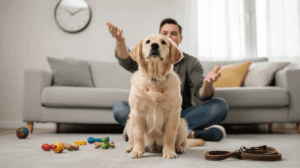
If you’re wondering how long puppy training sessions should be, the simplest answer is: keep them short and adjust them to your puppy. For many young puppies, a few minutes of focused training is enough for one session. As your puppy matures and develops better attention, you can gradually work for longer periods, but the goal should always be quality rather than filling a certain number of minutes.
This article covers session length, frequency, distractions, and practical ways to structure training for puppies from about 8 weeks through 12 months. It is a timing guide for San Antonio puppy owners who want to build obedience and good habits without turning training into a frustrating drill.
A useful starting point is about 3–5 minutes for many young puppies, with shorter sessions when your puppy is new to a skill or easily distracted. Older puppies may be able to work for 5–10 minutes at a time. These are guidelines, not strict rules. Your puppy’s attention, energy, motivation, and environment should determine when you continue, simplify the exercise, or stop. The American Kennel Club’s puppy training guidance also recommends keeping early training sessions brief and ending on a positive note.
Here’s what you’ll learn:
- How long puppy training sessions should be at different ages
- How many short sessions to fit into a typical day
- Signs that your puppy has had enough
- How distractions affect training time
- How to structure a short session for better learning
- When professional puppy training may make sense
Understanding Puppy Attention and Training Capacity
Puppies have developing attention spans, so a session that looks short to you can be mentally demanding for them. The goal is not to see how long your puppy can stay focused. It is to create enough successful repetitions for the puppy to understand what you are asking without allowing frustration or disengagement to take over.
Breed, temperament, sleep, hunger, motivation, training history, and environment can all affect attention. A puppy that works well for several minutes in a quiet living room may struggle to focus for even a minute in a busy outdoor setting.
Short sessions also make it easier to practice consistently. Instead of trying to complete one long training block, you can work a few repetitions into meals, potty breaks, walks, play, and other everyday routines. VCA Animal Hospitals similarly recommends keeping individual puppy training sessions to only a few minutes at first and practicing several times a day. VCA’s puppy training guide provides additional guidance on keeping early training short and adjusting it to the puppy.
Keep early practice brief and adjust the schedule to your puppy’s engagement. Short sessions give you opportunities to reward successful responses without continuing after your puppy becomes tired or distracted.

How Long Should Puppy Training Sessions Be by Age?
There is no scientifically established minute-by-month formula that applies to every puppy. Age is useful as a starting point, but your puppy’s behavior should determine the actual session length.
| Puppy Age | Practical Starting Point | Typical Focus |
| 8–12 weeks | About 2–5 minutes | Name recognition, sit, handling, potty and crate routines |
| 3–6 months | About 3–5 minutes, sometimes longer | Basic commands, leash skills, recall, impulse control |
| 6–12 months | About 5–10 minutes | Distractions, leash manners, recall, duration, and more advanced obedience |
8–12 Weeks: Keep It Very Short
At 8–12 weeks, many puppies do best with only a few minutes of focused work. You can use very short sessions throughout the day rather than expecting your puppy to concentrate through a formal training block.
Focus on simple skills such as responding to their name, sitting, coming to you indoors, accepting gentle handling, and building potty and crate routines. Puppies can begin learning basic skills at a young age, but expectations should remain age-appropriate.
3–6 Months: Build Skills Gradually
Between 3 and 6 months, many puppies can handle several minutes of focused work at a time. This is a useful stage for building basic obedience, loose-leash walking, recall games, and impulse-control exercises.
As your puppy becomes more reliable, increase difficulty gradually. You might change the location, add a mild distraction, increase distance, or ask for slightly longer duration. Avoid changing several variables at once.
6–12 Months: Increase Difficulty, Not Just Time
Older puppies and adolescents can often handle longer focused sessions, but that does not mean every session should become longer. At this stage, improving the quality of the behavior around distractions is often more valuable than simply adding minutes.
A 7-month-old puppy may perform well for 8 minutes in a quiet setting but struggle after two minutes around unfamiliar dogs. In that situation, reduce the difficulty rather than assuming the puppy needs a longer attention span.
How Many Puppy Training Sessions Should You Do Each Day?
For most puppies, several short opportunities are easier to manage than one long training period. A practical routine might include a few minutes of training after a potty break, before a meal, during a walk, or before settling down for the evening.
The exact number is less important than consistency. Some days may naturally include more practice than others. What matters is giving your puppy repeated opportunities to succeed without turning every interaction into a formal lesson.
A simple daily structure could look like this:
- Morning: Name recognition, sit, or down for a few minutes
- Midday: Brief leash or recall practice
- Afternoon: Place, handling, or impulse-control work
- Evening: Easy review and calm settling practice
These do not all need to be formal sessions. Asking for a sit before putting down the food bowl or practicing a calm wait at a doorway can reinforce the same communication skills.
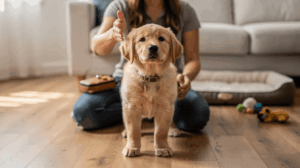
How Distractions Change Training Session Length
The environment can change how much your puppy can handle. Start new skills in a relatively quiet setting and increase distractions gradually as your puppy becomes more reliable.
Low Distraction
A quiet room or familiar area usually allows your puppy to focus more easily. This is a good place to introduce a new command or behavior.
Moderate Distraction
A backyard, quiet sidewalk, or familiar outdoor area adds more sights, smells, and sounds. Keep the exercise simple and be prepared to shorten the session if your puppy’s attention drops.
High Distraction
Busy parks, crowded sidewalks, unfamiliar locations, and areas with other dogs can make training much harder. Instead of automatically increasing the session length, reduce the difficulty and reward your puppy for brief moments of attention.
For San Antonio owners, this matters when moving from indoor practice to neighborhood walks or busier public environments. A behavior that is reliable at home may need to be practiced again in a new setting.
Signs Your Puppy Training Session Is Too Long
The clock is useful, but your puppy’s behavior is a better guide. Consider ending or simplifying the session if you notice:
- More mistakes on behaviors your puppy previously performed well
- Slower responses to familiar cues
- Wandering away or repeatedly sniffing instead of engaging
- Increased mouthing or grabbing at the leash
- Less interest in rewards
- Repeatedly looking away or avoiding the exercise
- Frustration when the task was previously easy
These signs do not automatically mean your puppy is stressed or that something is wrong. They can simply mean the exercise, environment, or session length is too difficult at that moment.
When you see a clear drop in engagement, ask for one easy behavior your puppy already knows, reward it, and end the session. You can try again later when your puppy is rested and ready.
What If Your Puppy Still Wants to Keep Training?
Some puppies remain engaged beyond the suggested time. That is not a reason to keep drilling the same exercise indefinitely.
If your puppy is still focused and succeeding, consider ending on a successful repetition and returning later. You can also make the next session slightly more challenging rather than simply making it longer.
For example, if your puppy consistently performs a sit indoors, you might practice the same cue in another room or in a quiet outdoor area. Change one factor at a time so you can see whether your puppy is actually ready for the next step.
How to Structure a Short Puppy Training Session
A short session does not need to be complicated. Try this simple structure:
1. Start With Something Easy
Begin with a behavior your puppy already understands. This helps establish engagement before you introduce something more difficult.
2. Practice One Main Skill
Choose one primary goal for the session. That might be sit, down, recall, leash position, place, or another age-appropriate skill.
3. Reward Successful Responses
Use a reward your puppy finds motivating. Depending on the dog and program, rewards can include treats, praise, toys, or play. Deliver the reward promptly after the desired behavior.
4. Increase Difficulty Gradually
Once the behavior is becoming reliable, change one variable at a time. Add a little distance, duration, distraction, or a new location rather than changing everything simultaneously.
5. End on a Success
Do not wait until your puppy is completely disengaged. Finish with an easy successful repetition, reward it, and take a break.
Why Short Sessions Usually Work Better Than Long Drills
Short training sessions help you maintain a high level of engagement and give your puppy more opportunities to practice successfully across the day. Veterinary and animal-behavior resources commonly recommend keeping puppy training short and rewarding rather than relying on long, repetitive sessions.
The goal is not to avoid training for too long because puppies are fragile. It is to match the difficulty and duration to what your individual puppy can handle successfully.
Spaced practice is also useful because learning does not happen only during the active training period. Puppies have time between sessions to rest and experience the behavior in different contexts.
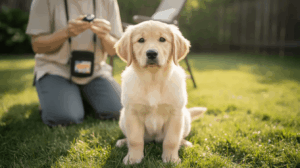
Common Puppy Training Session Mistakes
Training for Too Long
If your puppy is already losing focus, adding more repetitions usually does not improve the session. Shorten the work and return later.
Repeating the Same Cue Over and Over
If you say “sit” several times while waiting for a response, the puppy may learn that the first cue is optional. Instead, make the exercise easier, adjust your prompt, or reset the situation.
Increasing Difficulty Too Quickly
A puppy that knows sit in the living room does not automatically know sit at a busy park. Build reliability across locations and distractions gradually.
Training Only During Formal Sessions
Everyday routines create useful training opportunities. Practice calm behavior at doors, during meals, when putting on the leash, and during normal household activities.
Comparing Your Puppy to Another Dog
Two puppies the same age may have very different attention spans and training histories. Use age guidelines as a starting point, then adjust to the puppy in front of you.
When Professional Puppy Training May Help
Many owners can teach basic puppy skills at home with consistent practice. Professional support can be useful when you want structured guidance, need help troubleshooting a specific problem, or are having difficulty maintaining a consistent routine.
Off Leash K9 Training of San Antonio offers puppy-specific options including a One Puppy Training Consultation, Pawsitive Puppy Lesson Program, 10-Day Pawsitive Foundation Puppy Board and Train, Comprehensive Puppy to Adult Board and Train, and Online Puppy Training Course. Program details and eligibility vary by option.
For owners considering professional support, the puppy training service provides more information about the available programs. The current service page explains that young puppy training uses clicker, marker, treat, and reward-based methods, while e-collar training generally does not begin until a dog is at least five months old.
The American Veterinary Society of Animal Behavior also recommends positive reinforcement and continued, appropriate socialization during puppyhood. Its puppy socialization position statement provides additional guidance for owners working on early training and development.
Board and Train is another option for owners looking for an immersive format. The Board and Train service explains the available programs and how dogs train while staying with a professional trainer.
Frequently Asked Questions
How long should puppy training sessions be?
For many young puppies, about 2–5 minutes is a useful starting range. Older puppies may be able to work for 5–10 minutes. The right length depends on age, attention, motivation, environment, and the difficulty of the exercise.
How many times a day should I train my puppy?
Several short training opportunities throughout the day can work well. The exact number is less important than consistency and keeping each session productive. You can also incorporate training into meals, walks, potty breaks, and other daily routines.
Is five minutes too long for an 8-week-old puppy?
Not necessarily, but many puppies this age may need shorter sessions. If your puppy loses focus before five minutes, end the session sooner. A successful two-minute session is more useful than forcing a five-minute session after your puppy has checked out.
Should puppy training sessions get longer as my puppy gets older?
They can, but longer is not automatically better. As puppies mature, you can gradually increase duration when they remain engaged and successful. You should also increase difficulty gradually rather than focusing only on session length.
What should I do if my puppy loses interest during training?
Stop or simplify the exercise. Ask for an easy behavior your puppy already knows, reward it, and end the session if engagement does not return. You can try again later in a quieter setting or with a simpler version of the exercise.
Should I train my puppy before or after exercise?
There is no single schedule that works for every puppy. Choose a time when your puppy is alert and able to focus. If your puppy is overly excited after vigorous play or too tired after a long activity, give them time to settle before asking for focused work.
Can I train my puppy in distracting places?
Yes, but introduce distractions gradually. Build the behavior in a quiet environment first, then practice in progressively more challenging settings. If your puppy cannot focus, reduce the distraction or shorten the session.
When should I consider professional puppy training?
Consider professional help if you are unsure how to structure training, cannot make consistent progress, or need guidance with a specific behavior. A professional trainer can help you choose an appropriate training format and adjust the plan to your puppy’s needs.
Conclusion
The best answer to “how long should puppy training sessions be?” is not one exact number. For many young puppies, a few focused minutes are enough. As your puppy matures, you can gradually increase the duration when they remain engaged and successful.
Keep sessions short, practice consistently, increase difficulty gradually, and watch your puppy’s behavior rather than relying on the clock alone. A few productive minutes repeated throughout the day can build the foundation for reliable obedience without turning training into a frustrating marathon.
If you want help choosing a puppy training format in San Antonio, review the plans and pricing or contact Off Leash K9 Training of San Antonio for a consultation.