

Young puppies often sleep or rest for much of the day, cycling through short periods of activity followed by naps. Estimates commonly place young-puppy sleep toward the upper end of a dog’s daily sleep range, sometimes as high as 18-20 hours, but research has not established one required total for every puppy. Age, breed, health, activity, environment, and individual temperament all influence sleep. A predictable routine can provide valuable opportunities for rest while helping owners recognize changes that may warrant veterinary attention.
This guide covers puppy sleep patterns from 8 weeks through 1 year, with practical schedules, troubleshooting strategies, and age-specific guidance for new puppy owners. Whether you are managing a high-energy breed in the San Antonio heat or navigating your first few weeks with a new puppy, you will find flexible recommendations for building a consistent sleep routine that works for your household and your puppy’s development.
The short answer: Younger puppies generally sleep and rest more frequently than older puppies, but there is no scientifically established daily total that applies to every age and breed. An 8-week-old puppy may take numerous naps between brief activity periods, while an older puppy may stay awake longer and sleep more consistently overnight. Use age-based estimates as flexible planning guides and pay attention to your puppy’s normal behavior, health, and ability to settle.
By the end of this article, you will be able to:
- Understand how sleep patterns may change as your puppy matures
- Build a flexible routine around naps, meals, bathroom trips, and training
- Troubleshoot common sleep problems such as night waking and overtired behavior
- Recognize when a change in sleep may require veterinary or professional guidance

Understanding Puppy Sleep Development
Sleep is an important part of normal puppy development and recovery. From the time you bring your puppy home, its sleep patterns may change in response to age, activity, health, household routines, and new experiences. Understanding how puppy sleep evolves helps pet parents set realistic expectations and offer rest without forcing every puppy to follow the same schedule.
Why Sleep Supports Healthy Development
Sleep supports normal physical recovery and is associated with learning and memory processing in dogs. Research involving dogs has found relationships between post-learning sleep and memory performance, although much of this work has involved adult dogs rather than puppies. Research on canine sleep architecture also found that REM sleep decreased between approximately 2 and 6 months of age, showing that sleep architecture changes as young dogs mature.
A tired or overstimulated puppy may have more difficulty settling or focusing during training, but rest is only one factor affecting behavior. Health, hunger, fear, environmental stress, exercise, reinforcement history, and the difficulty of the task can also influence performance. Avoid expecting a specific amount of sleep to guarantee better command retention or prevent house-training setbacks.
How Sleep Patterns Evolve With Age
Puppy sleep patterns generally become more organized with age. Very young puppies tend to alternate frequently between activity and rest, while older puppies often remain awake longer and may sleep for longer stretches overnight. The timing of this change varies, and some puppies continue needing daytime naps or overnight bathroom trips longer than others.
Canine EEG research shows that several features of sleep continue changing through puppyhood and adolescence. The available evidence suggests that age and body size may influence some sleep measurements, but it does not provide a precise maturity date for every breed. Teething, social experiences, household routines, health, and environmental changes may also temporarily affect how easily a puppy settles.
Understanding this progression sets the foundation for building an age-appropriate but flexible routine.
Puppy Sleep Patterns by Age
The following sections describe general sleep patterns rather than mandatory daily totals. One large owner-reported study, part of the UK’s “Generation Pup” longitudinal cohort, found that 16-week-old puppies averaged 11.2 hours of sleep in 24 hours, although the researchers noted that owners may not have recognized every period of daytime sleep. This illustrates why sleep totals should be treated as estimates rather than strict requirements.
8-12-Week-Old Puppies
Puppies aged 8-12 weeks usually alternate between brief periods of activity and frequent naps. Many sleep or rest for a large portion of the day, but there is no universal requirement for a specific total or a fixed 30-60-minute awake window. Offer a calm place to rest after meals, bathroom trips, play, training, and stimulating experiences, while allowing the puppy’s behavior to guide the routine.
Overnight sleep and bladder capacity vary considerably at this age. Some puppies need more than one bathroom trip, while others can remain comfortable for longer stretches. Take the puppy outside promptly if it becomes restless or shows signs of needing to eliminate. Crate training can begin during this period, but the crate should be introduced positively and should never be used to make a puppy hold its bladder longer than it comfortably can. (For a closer look at realistic house-training timelines, see our guide on how long it takes to toilet train a dog.)
3-6-Month-Old Puppies
Between 3 and 6 months, many puppies remain awake longer and begin developing more predictable rest patterns. Some still need several naps, while others prefer fewer but longer periods of daytime rest. Because published research does not establish a required 14-18-hour range for this entire age group, use sleep totals as broad estimates rather than daily targets.
Teething, growth, changes in routine, and stimulating experiences can temporarily affect rest. Some puppies begin sleeping through the night during this stage, while others still need an overnight or early-morning bathroom trip. Readiness depends on bladder capacity, size, health, bedtime, water intake, and the individual puppy rather than a fixed age.
Awake periods can include brief obedience training, gentle play, enrichment, and carefully managed exposure to new environments. Offer an opportunity to rest after demanding activities and shorten the activity if your puppy becomes tired, unfocused, or overstimulated.
6-12-Month-Old Puppies
From approximately 6 to 12 months, puppies often begin resembling adults in the way they distribute sleep, with longer overnight rest and fewer daytime naps. Total sleep still varies substantially with breed, health, activity, and environment, so a range such as 10-16 hours should be treated as a broad estimate rather than a requirement.
Older puppies can usually participate in longer training and activity periods than very young puppies, but exercise should still match their physical development. Avoid assuming that every puppy is ready for sustained walks, strenuous exercise, or off-leash activity at six months. Consult your veterinarian about appropriate exercise, especially for large and giant breeds whose growth plates may remain open longer.
Older puppies may also benefit from carefully managed socialization experiences, training, and enrichment. Continue providing access to a quiet resting area even if your puppy no longer needs scheduled naps.
Creating Your Puppy’s Sleep Schedule
Knowing the general patterns is one step. Building a predictable routine around meals, bathroom trips, training, and family life is where the practical work happens. A consistent routine can support both sleep and house training while remaining flexible enough to accommodate your puppy’s individual needs.
Daily Schedule Framework
A puppy’s daily routine can follow a repeating cycle that adjusts with age:
- Wake and potty: Take your puppy outside promptly after waking. Puppies commonly need bathroom trips after sleeping, eating, drinking, and active play. Consistency is important for successful house training.
- Meal: Feed your puppy at consistent times using the portions and meal frequency recommended by your veterinarian or the puppy-food manufacturer. Young puppies often benefit from three or four smaller meals, but the timing of a transition to fewer meals varies. Allow time for a bathroom trip after eating and before bedtime.
- Activity window: Include age-appropriate play, training, mental stimulation, or enrichment. Keep activities manageable and stop while the puppy is still comfortable and engaged.
- Planned quiet period: Offer a crate, pen, puppy-proofed room, or designated sleeping area when your puppy appears tired or overstimulated. Introduce confinement positively and do not force a distressed puppy to remain in a crate simply to meet a predetermined nap schedule.
- Repeat: Cycle through meals, bathroom trips, activities, and rest throughout the day. Finish the evening with a calm and predictable bedtime routine.
Take your puppy for a bathroom break shortly before bedtime. Establish a calm, consistent routine using lower lighting and quiet interaction. Only leave a chew toy in the sleeping area if it is appropriate for the puppy, cannot be swallowed or broken apart, and can be used safely without direct supervision. If you live in an apartment or don’t have easy outdoor access for overnight trips, our guide to puppy potty training in apartments covers indoor-friendly routines that pair well with this schedule.
Sample Routine by Age
| Routine Point | 8-12 Weeks | 3-4 Months | 4-6 Months | 6-12 Months |
| Morning | Potty immediately after waking, then meal and brief activity | Potty, meal, and age-appropriate activity | Potty, meal, training, or play | Potty, meal, and activity suited to physical development |
| Daytime rest | Frequent naps between short activity periods | Several rest periods as needed | Rest after training, play, meals, or outings | One or more naps or quiet periods depending on the puppy |
| Potty breaks | After waking, meals, drinking, and active play | Continue frequent trips and follow the puppy’s signals | Gradually extend intervals when the puppy remains successful | Maintain a predictable routine based on individual bladder control |
| Evening | Calm play followed by potty and a consistent wind-down routine | Calm activity, potty, and bedtime routine | Lower-arousal activity before bed | Consistent bedtime with an opportunity to settle |
| Overnight | One or more trips may be needed | Some puppies still need a trip | Need varies by puppy | Many sleep through, but individual needs still vary |
| Sleep target | Follow the puppy’s need for frequent rest rather than forcing an exact total | Use age estimates as flexible guidance | Watch behavior and adjust rest opportunities | Maintain a stable routine without enforcing a universal hourly target |
These routines can be adjusted for working families. Consistent morning and bedtime anchors may help, even when the details in the middle of the day change. Use positive reinforcement to build a comfortable sleeping area, and avoid forcing your puppy into a crate or bed when it is showing significant distress.
Puppies benefit from a calm sleeping area with a comfortable temperature and limited disruption. Low-volume background noise may help some puppies, but others settle better in quiet surroundings. If you cover any part of a crate, preserve adequate airflow and make sure the puppy cannot pull the fabric inside and chew it. This is especially important in San Antonio, where indoor heat and reduced ventilation can create safety risks.
Transitioning Between Age Stages
Adjust schedules gradually rather than abruptly. When your puppy remains comfortable for longer periods, has fewer accidents, and settles reliably, make one small change at a time. Avoid extending awake periods according to a rigid formula. Continue offering opportunities to rest, and shorten activities again if the puppy becomes irritable, unfocused, distressed, or physically tired.
Maintain familiar training and household cues during transitions. Keeping structured obedience work consistent can provide predictability while the daily schedule changes. If you are enrolled in a training program, communicate significant routine changes to your trainer so expectations can be adjusted when necessary.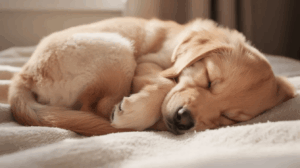
Common Sleep Schedule Challenges and Solutions
Even with careful planning, puppy sleep can be unpredictable. The following practical responses can help owners evaluate common problems without assuming that every disruption has the same cause.
Night Waking and Whining
Puppies may wake because they need to eliminate, feel frightened or uncomfortable, hear a disturbance, are too hot or cold, or are struggling with confinement. When a young puppy wakes and may need to eliminate, take it outside calmly, allow time for a bathroom break, and return indoors without turning the trip into playtime. Scheduled trips can help some households, but the timing should be adjusted to the puppy’s age, accident history, and individual signals.
Keeping the sleeping area near the bedroom may help some new puppies settle and allows owners to notice restlessness promptly, but it does not guarantee prevention of separation-related problems. There is no fixed age at which every puppy can sleep six to eight hours without waking.
Contact your veterinarian if waking changes suddenly or is accompanied by frequent urination, diarrhea, pain, intense thirst, breathing difficulty, or other signs of illness. A qualified trainer or behavior professional can help when fear or confinement distress appears to be involved.
Overtired or Overstimulated Behavior
Some overtired or overstimulated puppies become more active instead of settling. Zoomies, increased mouthing, restlessness, and difficulty focusing can occur when a puppy needs a break, but these behaviors can also result from excitement, insufficient activity, fear, frustration, or an unmet physical need.
When these signs appear after a busy period, reduce stimulation and offer access to a calm crate, pen, or sleeping area. Do not force a distressed puppy to remain confined. During warm San Antonio weather, keep activity appropriate for the temperature and provide a cool, ventilated indoor resting area, fresh water, and protection from heat.
Schedule Disruption From Training
Training, outings, and active play can be mentally or physically tiring for puppies. Sleep has been associated with memory processing in dogs, although research does not establish one required rest interval between puppy-training sessions.
Give your puppy an opportunity to rest after demanding activities and keep training sessions appropriate for its age and attention span. Some puppies settle well after calm evening training, while stimulating play may make others more alert. Observe your puppy’s response and adjust the timing rather than following a universal 30-60-minute restriction.
During periods of more frequent training, continue monitoring your puppy’s behavior and provide access to quiet rest. Training quality is generally more useful than repeating exercises after a puppy has become tired, distracted, or frustrated.
Conclusion and Next Steps
A predictable puppy sleep schedule can support a calmer household and make it easier to coordinate meals, bathroom trips, activity, training, and rest. The routine should become more flexible as your puppy matures rather than forcing the puppy to meet a fixed daily total.
Watch for changes in sleep, energy, appetite, bathroom habits, and behavior. Contact your veterinarian when a change is sudden, persistent, or accompanied by other signs of illness.
To put this guidance into action:
- Consider your puppy’s current age and use the patterns above as flexible starting points.
- Build a consistent daily routine around meals, bathroom trips, age-appropriate activity, and opportunities to rest.
- Track your puppy’s sleep, energy, appetite, bathroom habits, and ability to settle. Look for patterns over time rather than expecting specific improvements within one or two weeks.
- Adjust gradually as your puppy matures, making one change at a time and responding to the puppy’s behavior.
If sleep challenges appear connected to crate training, house training, or difficulty settling, Off Leash K9 Training of San Antonio offers puppy training programs covering age-appropriate obedience, crate foundations, routines, and puppy behavior. Request a free consultation to discuss which option may fit your puppy’s age and training needs.
Frequently Asked Questions
How does crate training help with a puppy’s sleep schedule?
Positive crate training can provide a familiar place for short periods of rest and can support house-training management. However, not every puppy immediately feels relaxed in a crate. Introduce it gradually, never use it as punishment, and provide bathroom breaks often enough that the puppy is not forced to hold its bladder beyond its capacity.
How many naps should a puppy have during the day?
Young puppies commonly take several naps throughout the day, but no required number or duration applies to every puppy. Older puppies often take fewer naps as their awake periods lengthen. Offer regular opportunities to rest and use your puppy’s behavior, activity, and health to guide the schedule.
What are signs that my puppy is overtired?
An overtired or overstimulated puppy may become restless, mouthy, unfocused, or unusually active. These signs are not specific to fatigue, so first consider whether the puppy needs a bathroom break, food, water, appropriate activity, relief from heat, or veterinary attention. If fatigue appears likely, reduce stimulation and offer a calm place to rest.
When can I expect my puppy to sleep through the night?
There is no single age when every puppy sleeps through the night without a bathroom break. Some do so within their first few months at home, while others may need overnight outings until approximately five months or longer. Size, health, bedtime, water intake, and individual bladder development all affect the timeline.
How can I create a sleep-friendly environment for my puppy?
Provide a calm, well-ventilated sleeping area at a comfortable temperature. Bedding should only be used if the puppy does not chew or swallow it. Low-volume background noise may help some puppies, but it is optional. Make sure any crate cover preserves airflow and remains out of the puppy’s reach.
How important is physical development in a puppy’s sleep needs?
Sleep and rest are normal parts of puppy development and provide recovery time after activity. However, healthy growth also depends on appropriate nutrition, veterinary care, safe exercise, genetics, and overall health. Avoid treating a specific sleep total as necessary for normal muscle or bone development.