

Puppy teething unfolds across five distinct stages from birth through approximately 7 months of age, and each stage brings specific challenges that directly impact training, behavior, and your furry friend’s well-being. Whether you’ve just brought home a new puppy or you’re navigating the peak chewing months, understanding where your pup falls on the puppy teething timeline lets you work with their natural development instead of fighting against it.
Here’s the direct answer: puppies start teething when the first set of baby teeth begins to erupt at around 3 weeks of age. From there, the teething process moves through baby teeth emergence (2–8 weeks), a full baby teeth set (8–12 weeks), the adult teeth transition (12–24 weeks), and adult teeth completion (6–7 months). Puppies develop 42 adult teeth after losing 28 baby teeth, and the entire process typically lasts about four months of active transition. Puppy teething is a natural process that often involves increased drooling and irritability-much like human babies experience during their own teething phases.
By the end of this guide, you will be able to:
- Recognize each teething stage and its telltale signs
- Adjust training techniques to match your puppy’s dental development
- Manage teething behaviors like excessive chewing and puppy biting
- Support healthy dental development and know when dental care intervention is needed
- Identify when professional veterinary or training help is necessary
Understanding Puppy Teething Development
Teething is the natural process where a puppy’s deciduous teeth (also called milk teeth) emerge through the gums and are later replaced by permanent adult teeth. This biological sequence involves root resorption-where the roots of baby teeth gradually dissolve internally as adult teeth develop and push upward into position. It’s a carefully orchestrated developmental process, but it comes with real discomfort that affects how your pup learns, plays, and behaves.
During teething, puppies experience swollen gums, sore gums, sometimes bleeding gums, and increased drooling. These physical sensations can reduce food motivation, increase irritability, and cause periods of regression in previously learned behaviors. A teething puppy may mouth or bite more intensely during play-not out of aggression, but because their gums hurt and chewing provides relief. This period also overlaps with critical developmental windows for socialization and bite inhibition, making it one of the most important stages in your puppy’s development.
The Purpose of Baby Teeth
A puppy’s baby teeth-all 28 of them-serve essential functions beyond just chewing food. Those tiny teeth, which are remarkably sharp, help puppies transition from mother’s milk to solid food during weaning. The incisors that emerge around 3–4 weeks of age allow pups to grasp softened food, while canines and premolars assist with early chewing as they explore their world.
Equally important is the role these deciduous teeth play in social development. Through play with littermates, puppies learn bite pressure control. When one puppy bites too hard, the other yelps and stops playing, teaching the biter to moderate their jaw strength. This early bite inhibition training is foundational, and it’s why handling your puppy’s mouth gently and rewarding soft-mouth behavior from the earliest weeks pays dividends throughout their life. Brushing puppy teeth should start as early as 8 weeks old to build positive associations with dental care.
Transition to Adult Teeth
The transition from 28 baby teeth to 42 permanent teeth is a gradual process that unfolds over several months. Adult incisors usually emerge first, followed by canines and premolars, with molars arriving last. Puppies start teething at 12–16 weeks of age, when baby teeth begin shedding and permanent adult teeth push through.
One complication to watch for: retained baby teeth. When a baby tooth doesn’t fall out as the adult tooth erupts beside it, it can cause crooked teeth, dental crowding, and increased risk of periodontal disease. This is especially common in small and toy breeds. Retained baby teeth can cause dental issues and should be monitored by a vet; early detection supports better long-term bite alignment. Puppies often swallow lost baby teeth, which is generally harmless, so don’t be alarmed if you don’t find many baby teeth around the house.
Understanding each specific stage-and how it affects training-is where the real practical value lies.
The Five Stages of Puppy Teething
Each teething stage presents different training opportunities, behavioral patterns, and management needs. Knowing what to expect at each phase helps you set realistic goals and avoid frustration during what can feel like a trying time.
Stage 1: Newborn (0-2 Weeks)
Puppies are born completely toothless. During these first two weeks, their eyes remain closed (opening around 10–14 days), and they rely entirely on nursing and proximity to their mother. There is no teething pain yet, and puppies have minimal mobility.
While this isn’t a training period in any traditional sense, it does establish the baseline for tactile sensitivity. Gentle handling by breeders during this window-including brief touches around the mouth area-begins building comfort with human contact that will matter enormously once teeth start emerging.
Stage 2: Baby Teeth Emergence (2-8 Weeks)
The first set of baby teeth begins to erupt at around 3 weeks of age, starting with the incisors. Canines follow, then premolars, with the full set of 28 baby teeth typically in place by 6–8 weeks old. Puppies have 28 baby teeth that emerge by 8 weeks, and these tiny teeth are needle-sharp.
This stage overlaps with the critical socialization period. Puppies begin weaning, exploring their environment through their mouth, and learning from littermates how hard they can bite before play stops. Bite inhibition training becomes possible once teeth have emerged, and humans can begin gentle mouth handling. Introducing soft teething toys during this phase gives puppies appropriate outlets for their growing need to chew.
Stage 3: Full Baby Teeth Set (8-12 Weeks)
By about 8 weeks of age, all deciduous teeth have erupted, and weaning is typically complete. This is when many puppies go to their new homes-and when formal training can begin in earnest. Basic obedience work like sit, stay, and recall can start, alongside continued socialization to people, other dogs, and new environments.
Because the puppy’s baby teeth are fully established and sharp, supervision during play and chewing is essential. This is an important stage for reinforcing gentle mouth behavior. Increased chewing behavior is a common teething symptom even before the adult transition begins, as puppies explore their world orally. Soft chew toys are recommended; avoid hard bones or toys that could damage these developing puppy teeth.
Stage 4: Adult Teeth Transition (12-24 Weeks)
This is the peak puppy teething phase and the most challenging period for both puppies and their owners. Puppies start teething at 12–16 weeks old, with baby teeth shedding and permanent teeth pushing through. Puppies lose 28 baby teeth during teething, and puppies lose baby teeth between 4–5 months of age as the process accelerates.
During teething, puppies experience swollen, red, or bleeding gums. A small amount of bleeding during teething is considered normal, but excessive bleeding warrants a call to your veterinarian. Teething can cause bad breath due to gum inflammation, and puppies may drool more while teething. Puppy teething can lead to excessive chewing on furniture and toys, and this increased chewing is their primary method of pain relief. Puppies may experience mild pain during teething, which can manifest as irritability, reduced appetite, or reluctance to engage in training.
Adult teeth begin to emerge around 4–5 months old, with incisors arriving first, followed by canines and premolars. This puppy transition period requires patience, flexible training approaches, and plenty of appropriate chew toys.
Stage 5: Adult Teeth Completion (6-7 Months)
Puppies typically finish teething by 6–7 months old, with the final molars being the last permanent teeth to emerge. At this point, your dog should have a full complement of 42 adult teeth, and teething discomfort wanes significantly.
With the teething process behind them, dogs are ready for more advanced obedience training, off-leash work, and distraction-proofing. This is also the time for a veterinary dental exam to check for any retained baby teeth, missing teeth, or malocclusions that could cause problems. Regular dental check-ups prevent tartar build-up and misalignment, supporting your dog’s long-term dental health.

Managing Training Through Each Teething Stage
Successful training during teething isn’t about pushing through discomfort-it’s about adjusting your approach to match your puppy’s current developmental reality. Here’s how to structure your training through each phase.
Early Stages Training Approach (0-12 Weeks)
Training during the first 12 weeks focuses less on commands and more on building a foundation of trust, gentle socialization, and positive associations. Handle your puppy’s mouth regularly-touch gums, lift lips, look at teeth-and reward calm acceptance with soft treats. Begin brushing with pet-safe toothpaste to establish lifelong dental care habits early.
Start basic bite inhibition during play: when your puppy bites too hard, let out a brief yelp and stop playing for a moment. This mirrors the feedback they’d receive from littermates. Introduce their name, basic recall, and sit, but keep expectations low and sessions brief (2–3 minutes). Food motivation works well during this period, but use softer treats that won’t irritate developing gums. Creating interactive training games at home keeps early learning positive and engaging.
Transition Stage Management (12-24 weeks)
This stressful time demands the most flexibility. Training sessions should be shorter-5 to 10 minutes maximum-with abundant rewards. Frozen toys can soothe sore gums during teething, serving double duty as both comfort and engagement tools. Frozen baby carrots can soothe a teething puppy’s gums while doubling as low-calorie treats. Chewing on rubber toys can soothe sore gums during teething, so keep a rotation of safe chew toys available at all times.
Expect regression in house training or leash manners-this is normal, not a training failure. Reinforce impulse control commands like “leave it” and “drop it” to channel oral behaviors productively. Use teething as an opportunity to teach these commands rather than viewing chewing as purely problematic. Keep distractions low on high-discomfort days, and maintain consistency in your training approach even when progress feels slow.
Stage Comparison for Training Planning
| Age Range | Teeth Status | Training Focus | Common Challenges | Management Tips |
|---|---|---|---|---|
| 0–2 weeks | No teeth | Gentle handling | None (pre-training) | Brief mouth touches during handling |
| 2–8 weeks | Baby teeth erupting | Bite inhibition, socialization | Sharp nipping, mouthing everything | Soft teething toys, gentle redirection |
| 8–12 weeks | Full 28 baby teeth | Basic obedience, socialization | Increased chewing, sharp bites | Supervised play, soft chew toys |
| 12–24 weeks | Baby teeth shedding, adult teeth emerging | Short sessions, impulse control | Peak discomfort, regression, reduced food motivation | Frozen treats, shorter sessions, patience |
| 6–7 months | Full 42 adult teeth | Advanced obedience, off-leash work | Habitual chewing if not redirected | Dental check, resume full training intensity |
During months 3–6, accommodate your puppy’s needs by lowering intensity. After 6–7 months of age, push forward with confidence into more demanding training work.
Common Challenges and Solutions
The puppy teething phase brings predictable problems. Knowing they’re coming-and having solutions ready-prevents frustration and keeps training on track.
Excessive Puppy Biting During Training
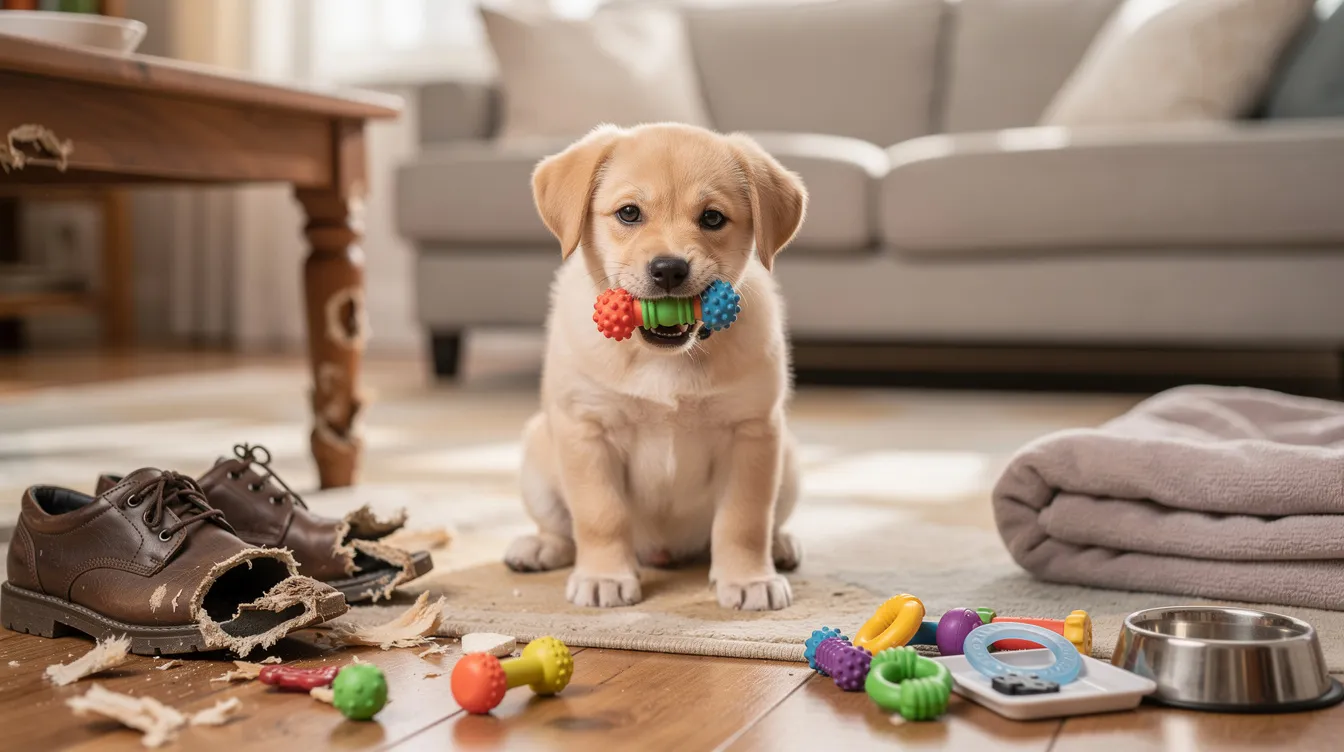
Teething puppies often chew to relieve gum discomfort, and that includes chewing on hands, arms, and clothing during training. This isn’t aggression-it’s a puppy seeking pain relief. Implement bite inhibition techniques: when your puppy bites too hard, immediately stop interaction and redirect to appropriate chew toys. Chew toys help massage gums and relieve teething pain, making them essential training companions. Avoid encouraging mouth-on-skin play, and ensure every family member responds consistently to biting. Provide a variety of chew toys to help teething puppies distinguish between acceptable and unacceptable chewing targets. Rope toys can also serve as effective redirection tools during training sessions.
Decreased Food Motivation
When a puppy’s gums are inflamed or sore, hard kibble and crunchy treats become aversive. Switch to softer, moister treats or small bits of cooked meat. You can also freeze soft treats inside a damp washcloth-this provides relief for the puppy’s gums while still delivering rewards. Avoid hard bones or treats that could cause additional mouth pain. Time training sessions around peaks of comfort rather than immediately after physical activity when your pup is tired and sore. Ice cubes can also provide temporary soothing, though some puppies prefer slightly softer frozen options like frozen carrots.
Regression in House Training
Discomfort from teething can reduce a puppy’s self-control, leading to accidents and inconsistency in previously reliable behaviors. This doesn’t mean your training has failed. Maintain a very consistent potty schedule, increase supervision, and reinforce small successes with high-value, soft rewards. Keep sessions positive and avoid punishing mistakes-your puppy is dealing with genuine physical discomfort that affects their ability to focus and control impulses.
Destructive Chewing of Training Equipment
Puppies during the peak teething stage may chew collars, leashes, shoes, and furniture as they seek anything that provides relief. Have safe chew toys always accessible and rotate them to maintain interest. Use bitter-tasting deterrent sprays on items you can’t remove. Strengthen “leave it” and “drop it” commands-this turns a problem behavior into a training opportunity. Introduce teething toys with varied textures (rubber, nylon, fabric) to satisfy different chewing preferences, but avoid hard toys that can damage developing puppy teeth.
Consult your veterinarian if you notice retained baby teeth, persistent bad breath beyond normal teething symptoms, excessive bleeding, or if your puppy shows signs of significant mouth pain that interferes with eating or training.
Conclusion and Next Steps
Understanding the puppy teething timeline transforms a potentially stressful time into a manageable, even productive phase of your puppy’s development. Each teething stage-from the toothless newborn period through the completion of all 42 permanent teeth-presents specific opportunities to build trust, teach bite inhibition, and develop obedience foundations that carry into adulthood. Puppy teething lasts from 3 weeks to 6–7 months old, and the discomfort is temporary, but the training habits you establish are permanent.
Here are your immediate action steps:
- Assess your puppy’s current teething stage by examining their mouth for baby teeth, loose teeth, or emerging adult teeth
- Adjust training session length and intensity to match their comfort level-shorter and gentler during peak teething at 12–24 weeks
- Stock up on appropriate chew toys, frozen treats, and soft training rewards to provide relief and maintain motivation
- Begin brushing your puppy’s teeth with pet-safe toothpaste to establish lifelong dental care habits and have their teeth brushed regularly
- Schedule a veterinary dental exam around 6–7 months to check for retained baby teeth or alignment issues
Once teething is complete, your dog is ready for advanced training, longer sessions, and the kind of reliable off-leash obedience that comes from a solid foundation built during those early months. If you’re navigating teething challenges and want expert advice tailored to your puppy’s specific stage, a puppy training consultation can help you develop a customized plan.
Additional Resources
For puppies in the thick of teething, structured programs designed around developmental stages make a significant difference. Our 10-Day Pawsitive Foundation Puppy Board and Train accommodates the teething timeline with appropriate chew relief and adjusted training intensity. For owners wanting comprehensive support from puppyhood through adulthood, the Comprehensive Puppy to Adult Board and Train program explicitly plans for teething-related behavioral shifts, ensuring your pup’s training progress stays on track through every stage.